Simplified Vacuum Leak Testing with Direct Manual Control
Model M offers a straightforward way to apply, monitor and repeat vacuum conditions in visual package leak testing—without recipes, menus or a PLC controller.
The procedure remains manual: the operator sets the vacuum, controls the time and observes the package according to the approved method.
Why simple leak tests can still produce variable results.
Complexity is not the only source of inconsistency. A manual test can also vary when vacuum targets, timing and operator actions are not clearly controlled.

A simpler architecture can help
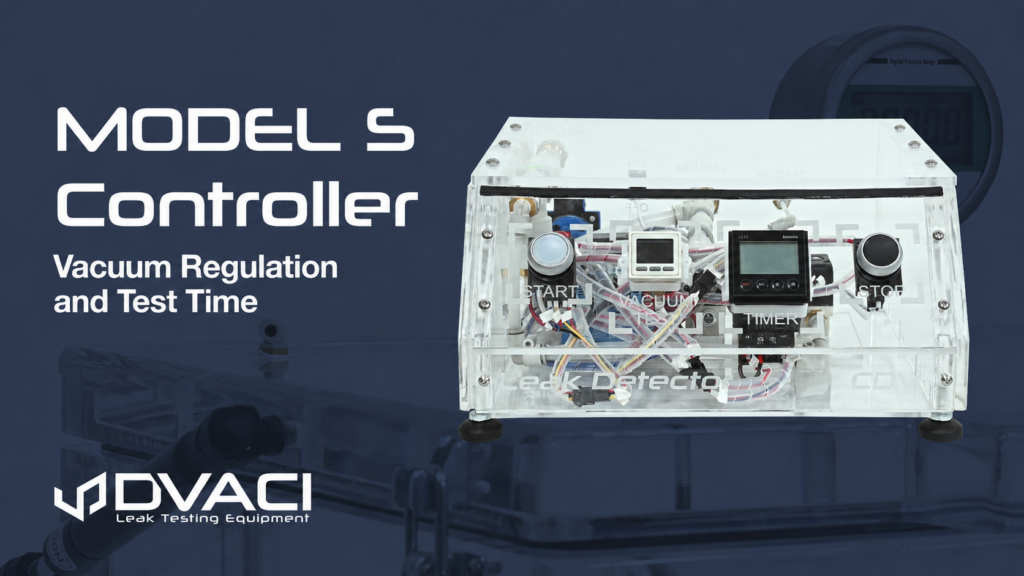
Model M uses direct controls and a clear digital vacuum reading. When paired with a written procedure, trained operators can follow one operating logic across compatible CDV chamber sizes.
- Defined vacuum target
- Defined exposure time
- Consistent observation window
- Documented acceptance criteria
How Model M establishes the test condition.

Regulate vacuum
Use the manual valve to approach the vacuum target specified by the procedure.

Control the air bleed
Balance the system so the required operating condition can be reached consistently.

Lock the adjustment
Use the locknut to reduce unintended changes to the selected manual setting.

Read the vacuum
Follow the digital gauge while controlling time and observing the package.
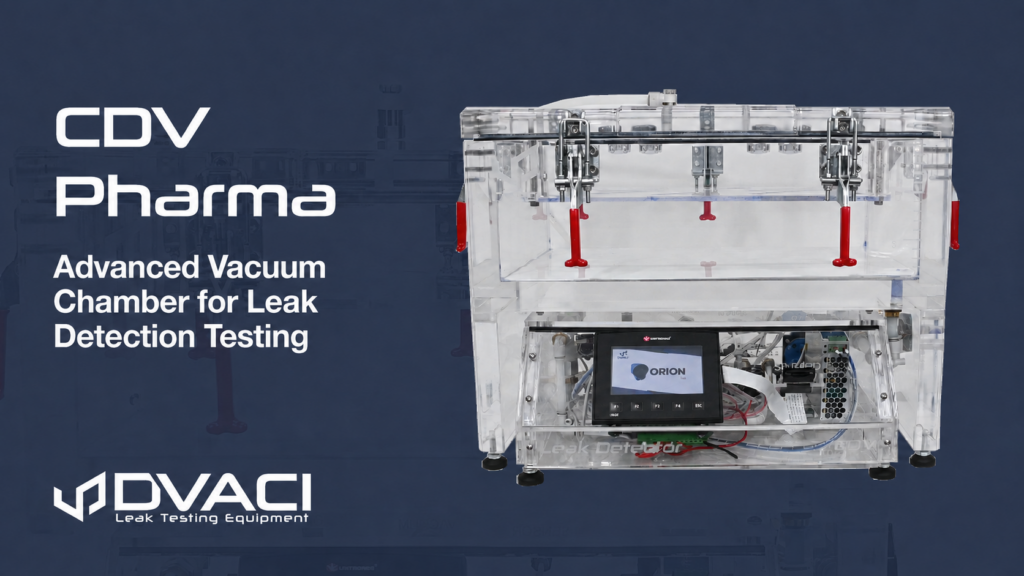
Compatible with the CDV vacuum-chamber family.
The same Model M control approach can be applied across compatible CDV chamber sizes. This lets the package dimensions determine the chamber while preserving a familiar manual workflow.
Actual vacuum performance depends on the chosen chamber, vacuum source, installation altitude and package application.

Can Model M be used for ASTM D3078 testing?
Model M can provide the vacuum control and measurement functions used in an ASTM D3078 bubble-emission setup. The flexible package is immersed, vacuum is applied and the operator observes for the indication defined by the method.
The equipment alone does not make a test compliant. The user must establish suitable parameters, conditioning, observation rules, acceptance criteria, documentation and method validation for the specific package.

Technical distinction: “Standardized” means operators follow the same controlled procedure. Model M does not automatically regulate vacuum, run a programmed timer or save electronic test records.
Visual testing in immersion or a dry chamber.
The correct observation method depends on the package, product and test objective.

Immersion bubble testing
Submerge suitable packages and observe for a continuous or localized bubble stream while vacuum is applied.

Dry visual testing
For appropriate liquid-filled containers, inspect for visible product seepage without filling the chamber with test fluid.
Is a simplified manual system appropriate for your process?
Model M may fit when...
- Testing is occasional or routine.
- A trained operator can follow a controlled procedure.
- Visual results and manual documentation are acceptable.
- Direct vacuum adjustment is preferred.
- Stored recipes and automated reports are unnecessary.
Consider Model S or P when...
- Automatic vacuum regulation is required.
- Test time must be controlled by the system.
- Products require different stored recipes.
- User permissions or barcode selection are needed.
- Electronic results, exports or reports are expected.

Start simple—without limiting future evaluation.
If requirements later expand toward automation, traceability or data management, the application should be reassessed against Model S or Model P capabilities.
ASTM D3078 and Model M FAQ
Does Model M automatically control the ASTM D3078 test?
No. The operator adjusts vacuum, monitors the gauge, controls time and observes the package according to the procedure.
Does ASTM D3078 specify one vacuum level for every package?
No. Parameters must be established for the specific package and should avoid excessive deformation or damage while providing adequate sensitivity.
Can Model M store product recipes or test reports?
No. Those functions require a more advanced control and documentation workflow, such as an appropriate Model P configuration.
Can the same controller work with different CDV chamber sizes?
Model M is designed for compatible CDV chambers. Final compatibility and performance must be confirmed for the selected chamber and vacuum source.
Can Model M perform dry and immersion testing?
It can provide vacuum control for both approaches when the chamber configuration, package and approved procedure are suitable.
Test Model M with your actual package.
Share your samples, method and target conditions so DVACI can evaluate application fit.
Latest Articles
News, technical guides and insights about package leak testing.