Methylene Blue Dye Ingress Leak Test: USP, ASTM & ISO Standards Explained
Package integrity standards can look like a collection of overlapping rules. The practical way to read them is to separate guidance documents, package-specific dye and vacuum procedures, dye penetration seal tests and bubble-emission methods.
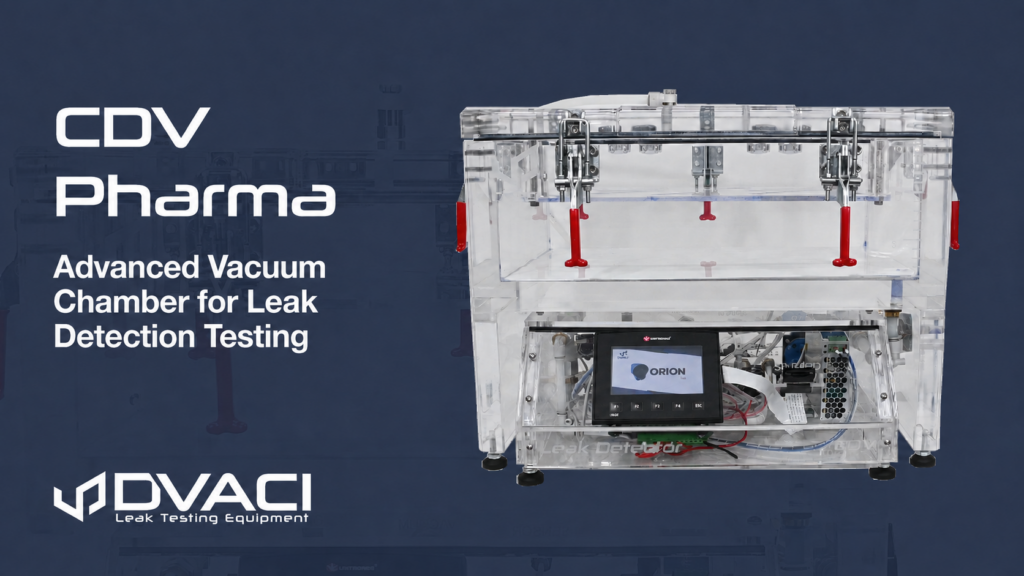
A vacuum leak tester for packaging can support several visual test approaches, but the same chamber does not make those approaches interchangeable. The applicable document depends on the package, product, defect type and purpose of the study.
Four groups make the standards easier to understand
Before comparing settings or equipment, determine what kind of document you are reading. A framework, a pharmacopeial procedure, a seal test and a bubble test answer different questions.
Integrity frameworks
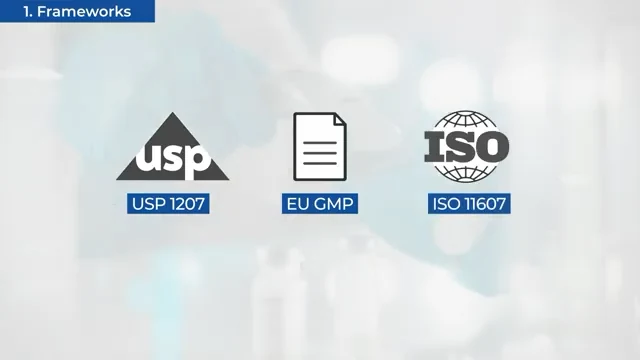
Documents such as USP <1207>, EU GMP Annex 1 and ISO 11607 establish lifecycle, validation and quality-system expectations. They help users decide what a suitable method must demonstrate rather than supplying one universal recipe.
Dye with vacuum or pressure
Pharmacopeial and ISO texts may describe visual dye ingress procedures for particular components or package formats. Their scope, current edition and acceptance criteria must be checked before use.
Dye penetration
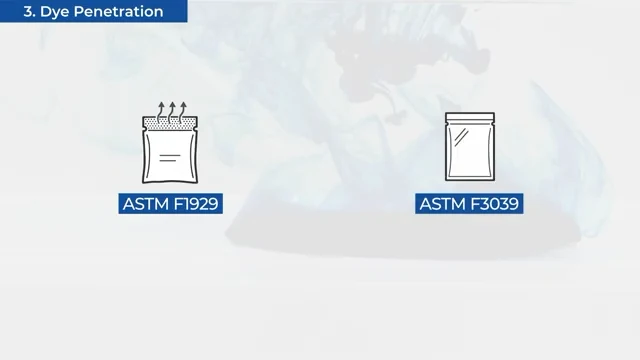
ASTM F1929 and ASTM F3039 apply dye locally and use capillary action to reveal channels or leak paths. These written procedures should not automatically be described as vacuum-chamber tests.
Bubble emission
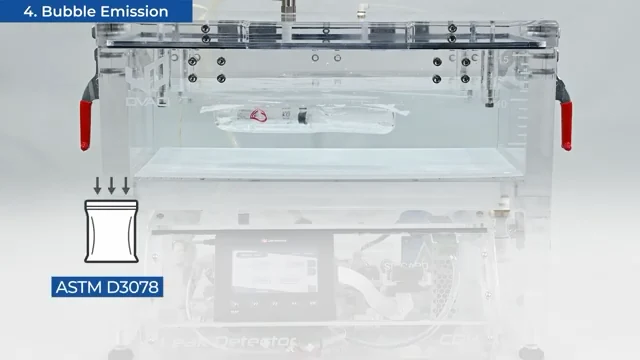
Standards such as ASTM D3078, ASTM F2096 and ASTM D4991 use a pressure differential to make escaping gas visible as bubbles, but their package scope and pressure-generation approach differ.
What each document contributes
| Document | Group | Main role | Important distinction |
|---|---|---|---|
| USP <1207> | Framework | Guidance for package integrity assurance, method selection, validation and use across the product lifecycle. | It is not one step-by-step dye immersion recipe. |
| EU GMP Annex 1 | Framework | GMP expectations for sterile medicinal products, including validated container-closure integrity controls. | It establishes expectations rather than prescribing one test for every package. |
| USP <381> and Ph. Eur. 3.2.9 | Package-specific references | Historically cited or package-specific pharmacopeial requirements associated with elastomeric components and closures. | Verify the current edition, exact scope and approved internal procedure before applying any settings. |
| ISO 8871-5 | Package-specific testing | Functional requirements and testing for elastomeric parts used with parenteral preparations and pharmaceutical devices. | The package component and applicable annex determine relevance. |
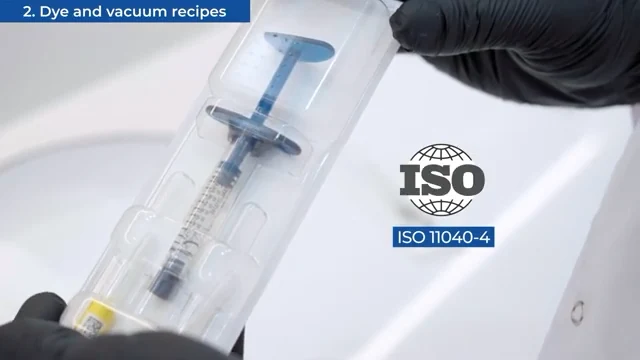
| ISO 11040-4 | Package-specific testing | Requirements related to glass barrels and sterilized subassembled syringes ready for filling. | The correct reference is ISO 11040-4, not ISO 11044-4. |
| ASTM F1929 | Dye penetration | Detection and location of channel defects in seals involving a transparent material and a porous sheet. | The standard applies dye locally; it is not written as a vacuum immersion procedure. |
| ASTM F3039 | Dye penetration | Detection of leaks in nonporous packaging or flexible barrier materials using dye penetration. | It is destructive, visual and pass/fail; leak size should not be inferred from the result. |
| ASTM D3078, F2096 and D4991 | Bubble emission | Visible leak detection through gas escape under external vacuum or internal package pressurization. | Package format and how the pressure differential is generated determine the applicable standard. |
Frameworks tell you how to build an integrity strategy
USP <1207>, EU GMP Annex 1 and ISO 11607 operate above the level of a single test cycle. They focus attention on the package-product system, the lifecycle stage, the maximum acceptable leakage risk, validation and continued control.
This matters because no test is suitable for every container-closure system. A method must be selected for the package geometry, product characteristics and defect the organization needs to detect.
Package-specific texts can describe dye under a pressure differential
Some pharmacopeial and ISO procedures use a colored tracer with vacuum, pressure or both to challenge a defined package component. The visual acceptance principle is straightforward: evidence of tracer inside the protected area indicates failure.
Similar test logic does not make two documents universally equivalent. The applicable package, tracer formulation, pressure profile, exposure time, inspection method and acceptance criteria must come from the current document and the organization’s validated procedure.
Editorial safeguard: do not copy settings from another package format merely because both procedures use methylene blue.
Dye penetration is not automatically a vacuum test
ASTM F1929 addresses seal leaks in porous medical packaging. ASTM F3039 addresses nonporous packaging or flexible barrier materials. In the written methods, dye is applied to a defined area and allowed to move through a channel by capillary action.
The standards are useful for locating visible leak paths, but the outcome is qualitative. They do not provide a quantitative leak rate, and the tested samples are not returned to production use.
What changes when a laboratory adds a vacuum chamber?
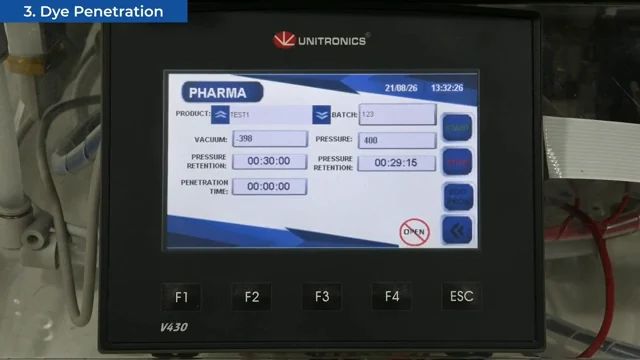
Some laboratories combine the dye formulation or visual acceptance concept from a penetration standard with an externally applied vacuum or a vacuum-pressure cycle. The added differential pressure can help drive tracer through a real leak path under the laboratory’s chosen conditions.
That can be a technically useful internal method, but it is not automatically the procedure described in ASTM F1929 or ASTM F3039. The laboratory should document the modification, justify the parameters, establish sensitivity and validate the resulting method for its intended use.
Audit language matters: say “modified method based on” when vacuum or pressure has been added to a standard that does not include it. Do not claim unqualified compliance with the unmodified standard.
Bubble emission uses the same visual idea—but not the same tracer
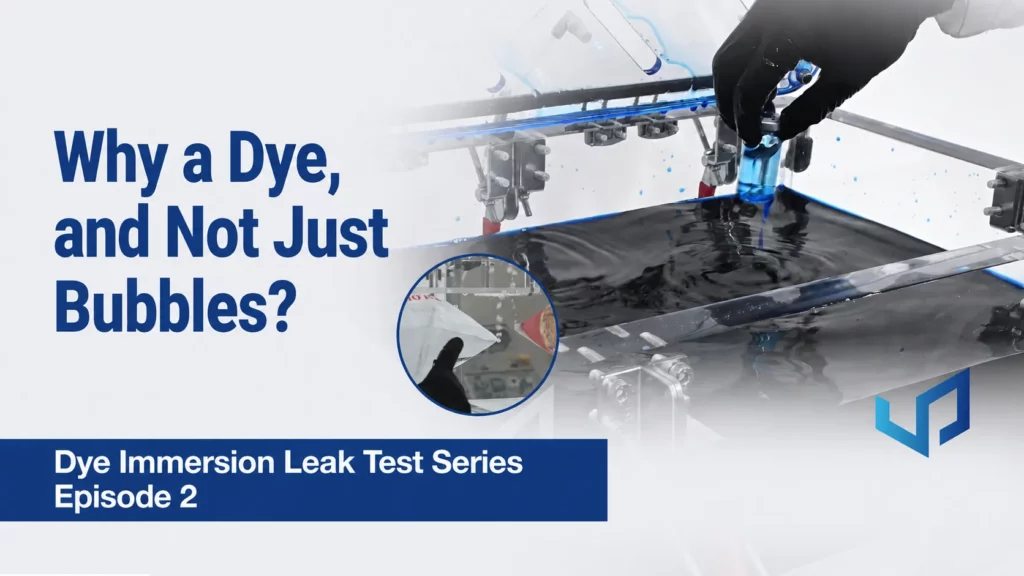
In a bubble test, the package is submerged and the operator watches for escaping gas. There is no colored liquid moving into the package. The visible indication is a continuous or localized bubble stream produced by a pressure differential.
How to decide which standard applies
The standard should follow the package and the decision—not the equipment already available in the laboratory.
Identify whether the system is a vial, syringe, blister, bottle, porous medical pouch, flexible nonporous package or rigid container.
Decide whether the objective is to find a seal channel, visible dye ingress, gross leakage, a specific leak limit or another integrity attribute.
Use the current official edition, verify its scope and record any modification made to the written procedure.
Frequently Asked Questions about Dye Immersion Standards
Does USP <1207> provide one dye immersion procedure?
No. USP <1207> is a family of guidance chapters addressing package integrity assurance, method selection, validation and test technologies. Package-specific procedures may appear in other pharmacopeial or compendial texts.
Are ASTM F1929 and ASTM F3039 vacuum chamber tests?
Not as written. They are dye penetration methods in which dye is applied locally and moves through a defect by capillary action. Adding vacuum creates a modified procedure that should be documented and validated.
What is the difference between dye ingress and bubble emission?
Dye ingress looks for colored tracer that enters through a leak path. Bubble emission looks for gas escaping from a submerged package under a pressure differential.
Can two similar pharmacopeial procedures be treated as equivalent?
Not automatically. Similar tracer concentrations or pressure profiles do not override differences in package scope, current edition, sample preparation, exposure conditions and acceptance criteria.
Which standard should be used for a specific package?
Selection begins with the package format, product, defect of concern and study objective. The next episode applies this decision process to vials, syringes, blisters, bottles and pouches.
Which method applies to your product? Episode 6 goes package by package through vials, syringes, blisters, bottles and pouches.
Need to translate a standard into a practical test setup?
Share your package format, product, governing document and test objective. DVACI can help evaluate a suitable chamber and operating configuration while keeping the written standard and any internal modifications clearly separated.
Latest Articles
News, technical guides and insights on package leak testing.