How to Define Pressure and Observation Time for Bubble Leak Testing
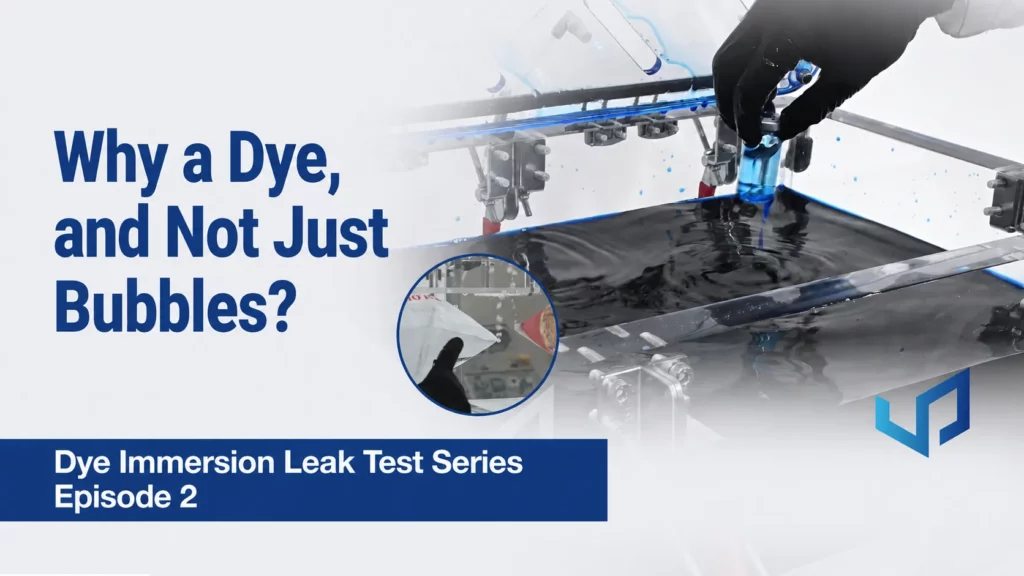
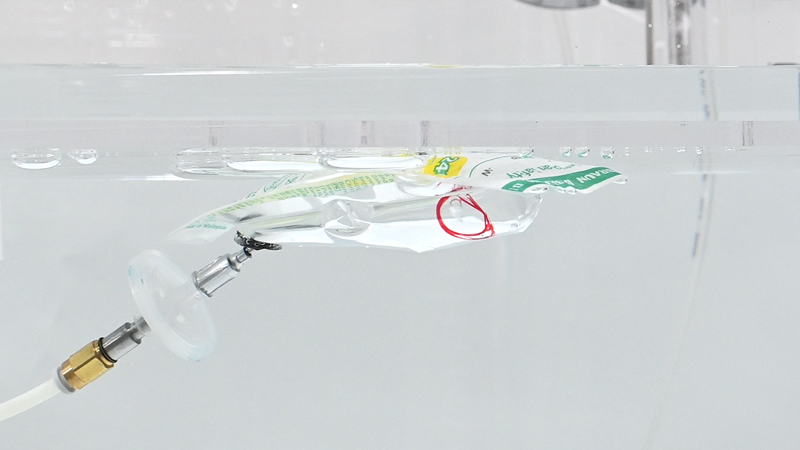
ASTM F2096 detects gross leaks by internally pressurizing a package under water and observing for a continuous stream of bubbles.
The test pressure and observation time must be established for the package and intended defect sensitivity. Incorrect parameters can hide leaks or mechanically compromise otherwise acceptable samples.
How are pressure and time selected?
Use a characterized control sample to identify the minimum pressure at which the known defect produces a visible bubble stream. Then establish an operating pressure that provides adequate detection without causing unacceptable package or seal damage.
Observation time should be long enough to reveal the known defect under the selected conditions, while remaining below a duration where delayed package deformation could be mistaken for a leak.
A bubble test is only as useful as its test conditions.
The package must be pressurized enough to drive gas through the target leak—but not so aggressively that the test creates damage unrelated to the original defect.
Use a control sample
Introduce a known, characterized defect appropriate to the package and sensitivity goal.
Increase pressure gradually
Identify the point at which the control defect creates a clear, repeatable indication.
Check package behavior
Confirm that seals, materials and closures remain within acceptable mechanical limits.
Measure leak appearance
Record how long the known defect takes to become visible at the selected pressure.
One pressure does not fit every package
Package volume, materials, seal geometry, porosity, restraining conditions and the selected control defect all influence the minimum useful pressure and observation time.
Start with the minimum pressure that reveals the control defect.
Pressurize the control sample gradually and record the first condition that produces a clear, repeatable bubble stream from the known leak. Below this detection point, the selected setup cannot demonstrate the intended sensitivity.
DVACI may then evaluate an operating pressure approximately 10%–30% above that minimum revelation pressure, provided the package remains mechanically acceptable.
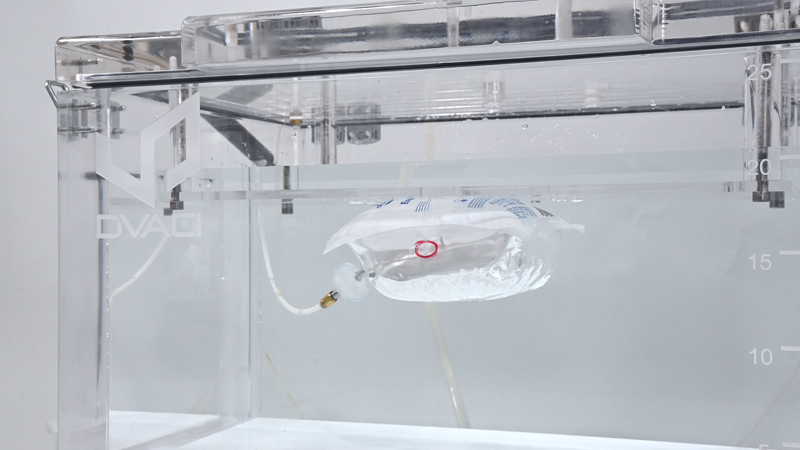
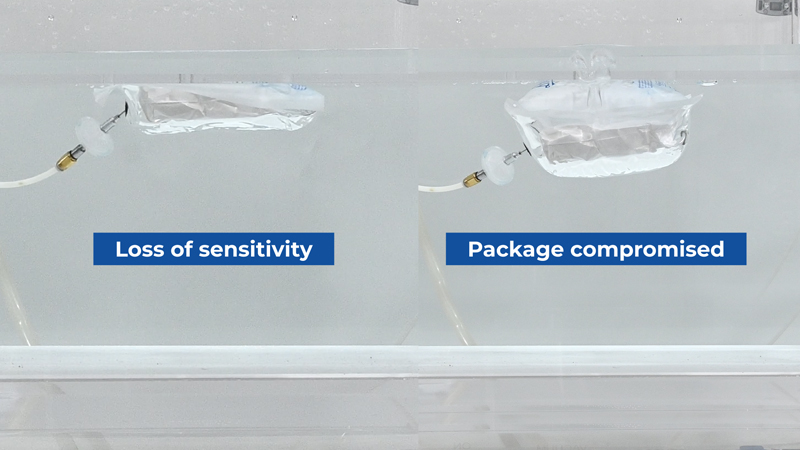
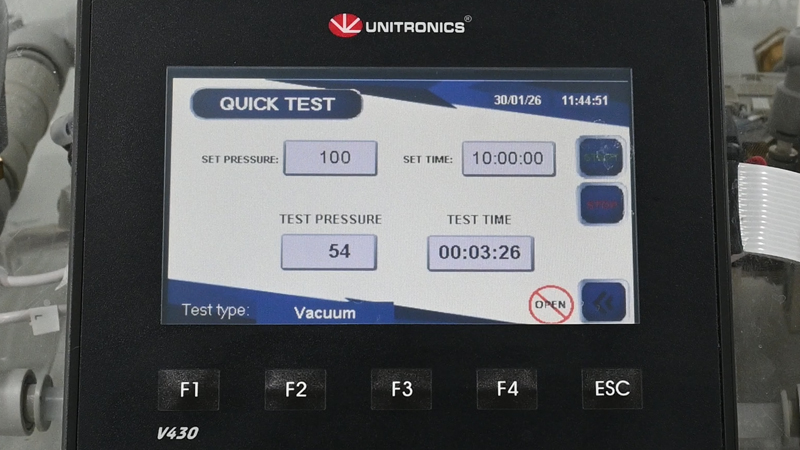
Important distinction: The percentage range is practical DVACI guidance. The final pressure must be justified and validated for the actual package, control defect and quality-system requirements.
The control sample connects pressure with detectable leak size.
Create the known defect
Use a suitable calibrated pin, filament or other characterized method for the package.
Locate the threshold
Increase pressure until the defect creates a clear, repeatable bubble stream.
Confirm repeatability
Repeat the setup to verify that the indication is consistently detected.
Tyvek and medical paper require additional interpretation.
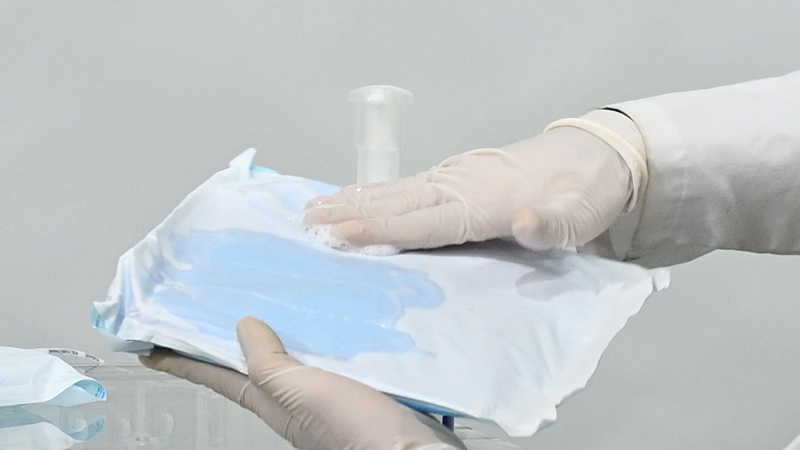
Porous material can release air through its structure once internal pressure exceeds its breathing pressure. These bubbles can be mistaken for a seal or material defect.
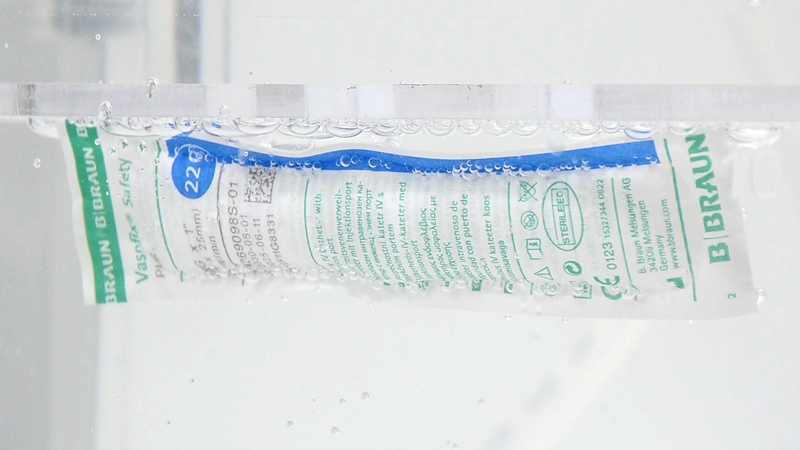
Recognize material breathing
Diffuse bubbling across a porous surface behaves differently from a localized leak indication.
Use an appropriate blocking approach
Apply the method permitted by the current standard and validated procedure before evaluating the package.
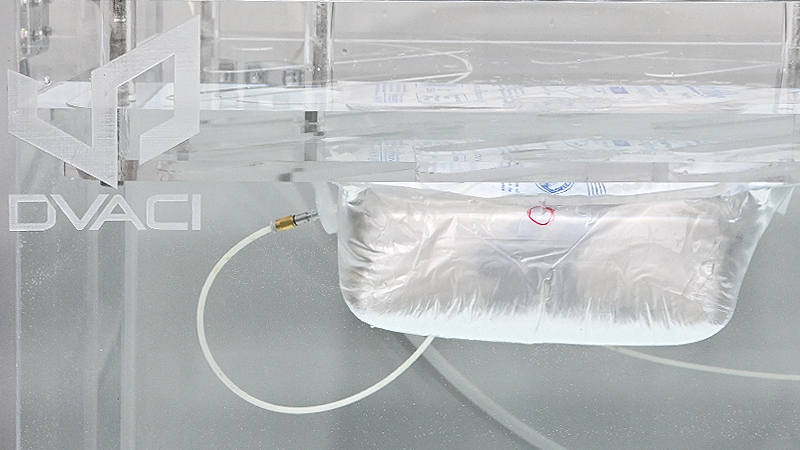
Observe at least long enough to reveal the known defect.
If the control leak becomes visible only after a defined interval at the selected pressure, a shorter observation cannot demonstrate detection of that same defect under those conditions.
Repeat testing should confirm that the chosen time consistently captures the control indication.
Also define a reasonable upper time limit.
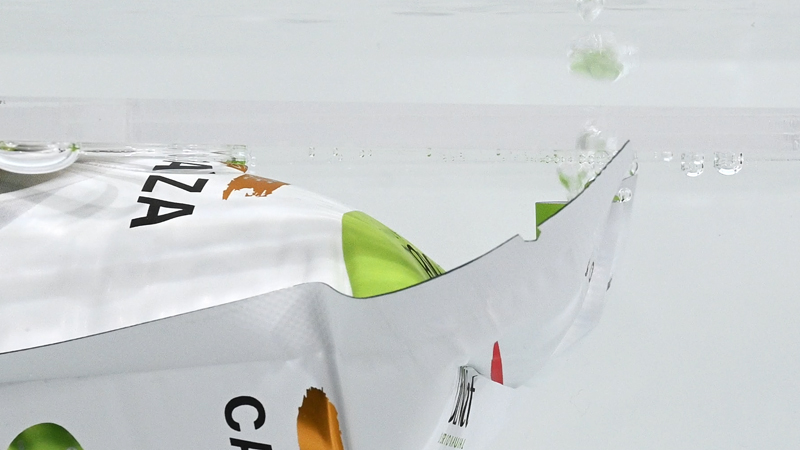
Extended internal pressure may change the package mechanically. The procedure should distinguish a pre-existing gross leak from failure induced by prolonged exposure or excessive pressure.
Do not interpret every delayed bubble as an original defect. Investigate whether the test itself has changed the seal or package structure.
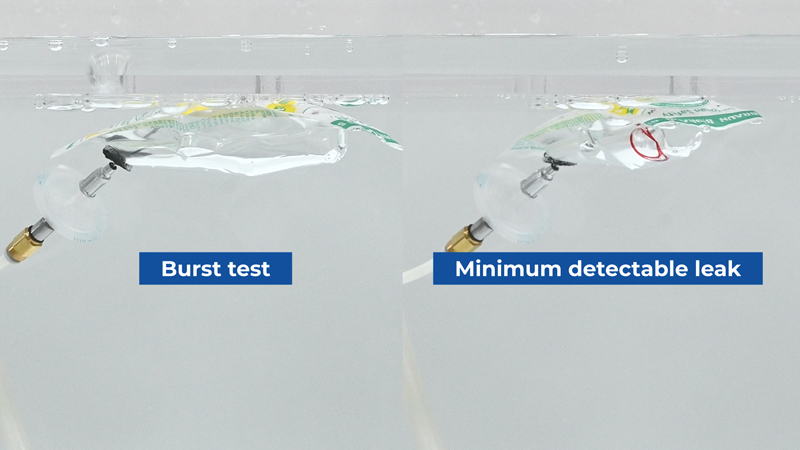
Use burst testing to understand the upper mechanical limit.
A maximum-pressure or burst evaluation can help identify the package's failure boundary. Knowing the lower detection threshold and upper mechanical limit makes the operating window easier to justify.
Burst testing is supplemental development information and is not part of the ASTM F2096 leak-detection method. Use the appropriate burst standard and equipment configuration when generating formal burst results.
ASTM F2096 Pressure and Time FAQ
Does ASTM F2096 prescribe one pressure for every package?
No. Pressure must be established for the specific package, control defect and intended sensitivity using a validated approach.
Is 10%–30% above minimum detection pressure required by ASTM?
No. It is a DVACI development guideline that may be evaluated after identifying the minimum control-leak revelation pressure.
How is observation time selected?
Use repeated control-sample results to establish a time that consistently reveals the known defect at the selected pressure.
Why can Tyvek create bubbles without a defect?
Tyvek is porous and allows gas transmission. Above its breathing pressure, diffuse bubbles can emerge from the material and must be distinguished from a localized leak.
Is burst testing part of ASTM F2096?
No. It is supplemental development information and should follow the appropriate burst method when formal results are required.
Define F2096 pressure and time with your actual package.
Send DVACI your samples, package details and target defect information.
Latest Articles
News, technical guides and insights about package leak testing.