Internal Pressurization and Burst Testing in One Protocol
A combined internal pressurization and burst-test protocol can examine two different package characteristics in sequence: pressure-decay behavior at a defined pressure, followed by seal failure resistance during a controlled pressure increase.
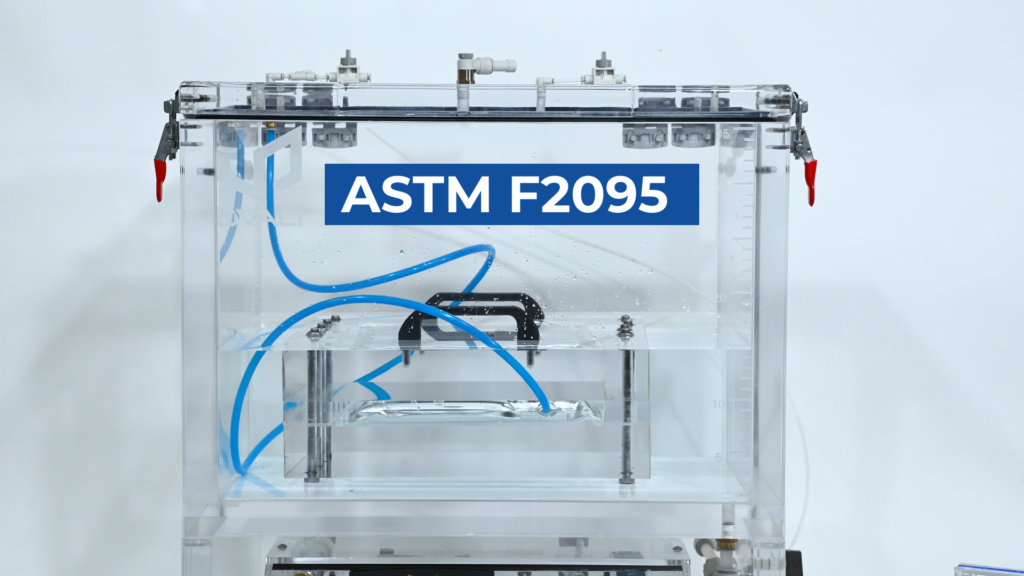
This case study explains how DVACI developed a customer-specific application inspired by ASTM F2095 and ASTM F2054 for a flexible package.
Can Leak Integrity and Burst Strength Be Evaluated in One Protocol?
Potentially, when the equipment, fixture, package and control sequence are engineered for both stages. The first stage holds a defined internal pressure and monitors pressure decay. The second increases pressure at a controlled rate until the specified endpoint or package failure.
The two results answer different questions and must retain separate acceptance criteria.
Understand what each ASTM method evaluates.
Pressure-decay leak testing
This family of test methods addresses pressure-decay leak testing of flexible packages, with or without restraining plates. A pressurized package is monitored for a pressure change during a defined measurement period.
Burst testing with restraining plates
This method evaluates the minimum burst strength of perimeter seals in flexible packages while internal pressure increases between restraining plates.
These methods should not be treated as interchangeable. Pressure decay evaluates a leak-related pressure response; burst testing evaluates the pressure at which a seal fails under the selected test configuration.
A customer question became a combined application.
The objective was to pressurize a flexible package, evaluate its leak integrity and then continue into a controlled seal-strength assessment.
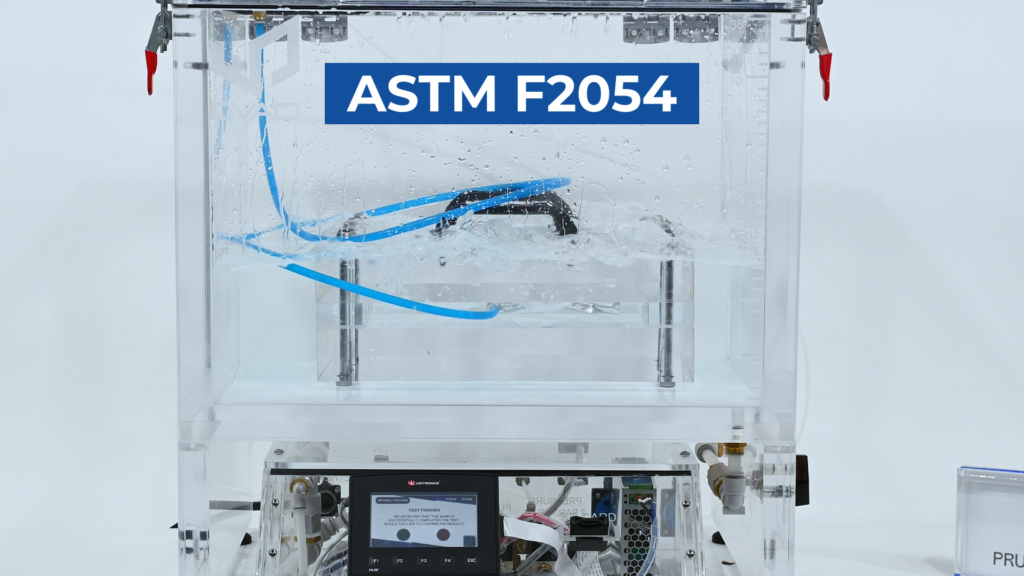
A protocol with two controlled stages
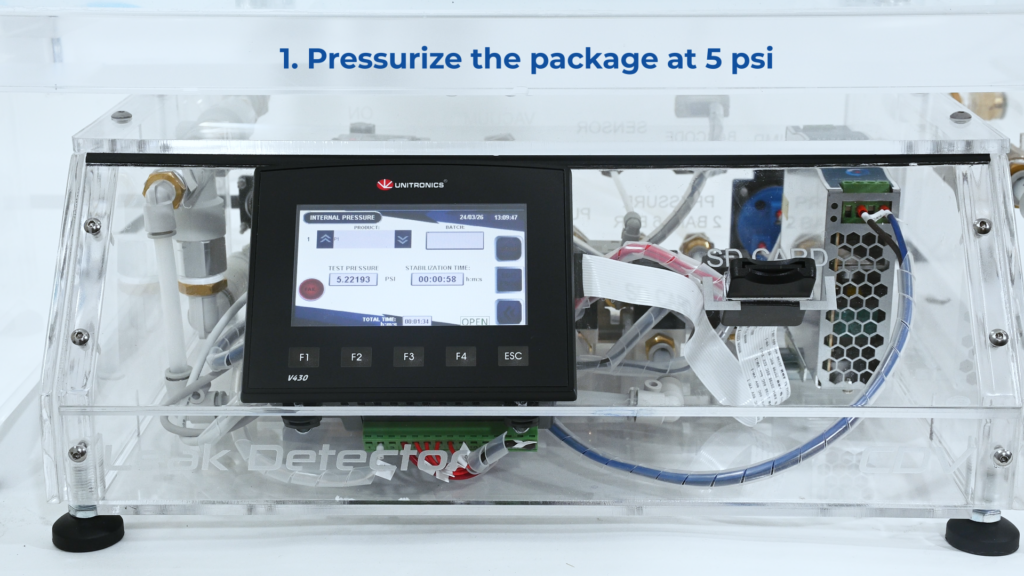
Hold at 5 psi
For this project, the package was pressurized to 5 psi for a defined time while the system evaluated pressure behavior that could indicate leakage.
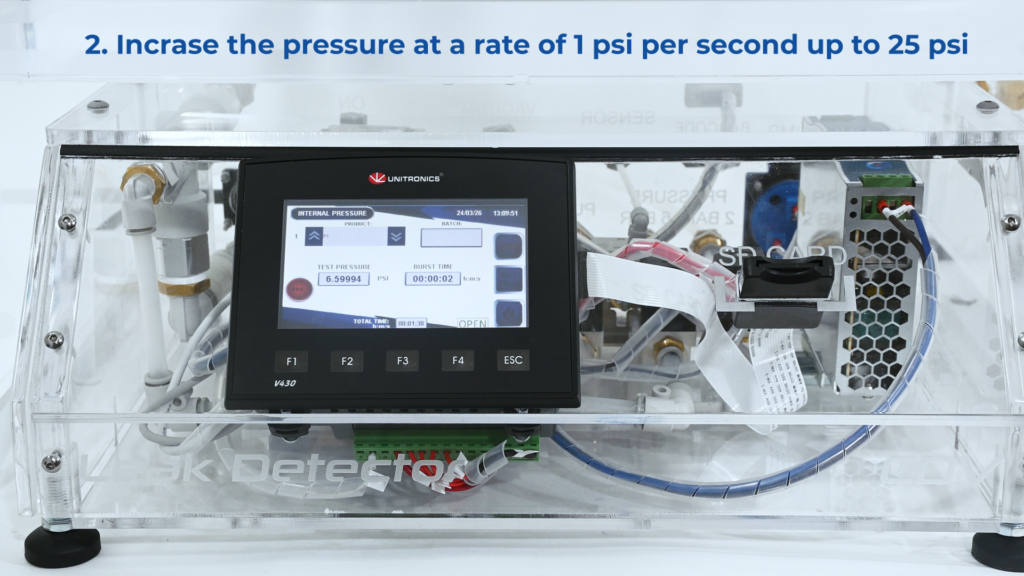
Ramp at 1 psi/s toward 25 psi
After the first stage, pressure increased at 1 psi per second toward the customer's 25 psi test condition to evaluate package-seal resistance.
Important: 5 psi, 1 psi per second and 25 psi describe this development project. They are not universal ASTM settings and should not be copied to another package without method development, risk assessment and validation.
Development required more than a software change.
Early configurations revealed mechanical limitations. DVACI conducted controlled engineering trials above 50 psi to characterize system behavior, refine the design and determine the boundaries of the intended configuration.
High-pressure development requires appropriate guarding, rated components and documented safety controls. These trials must not be reproduced on standard equipment or outside an engineered test environment.
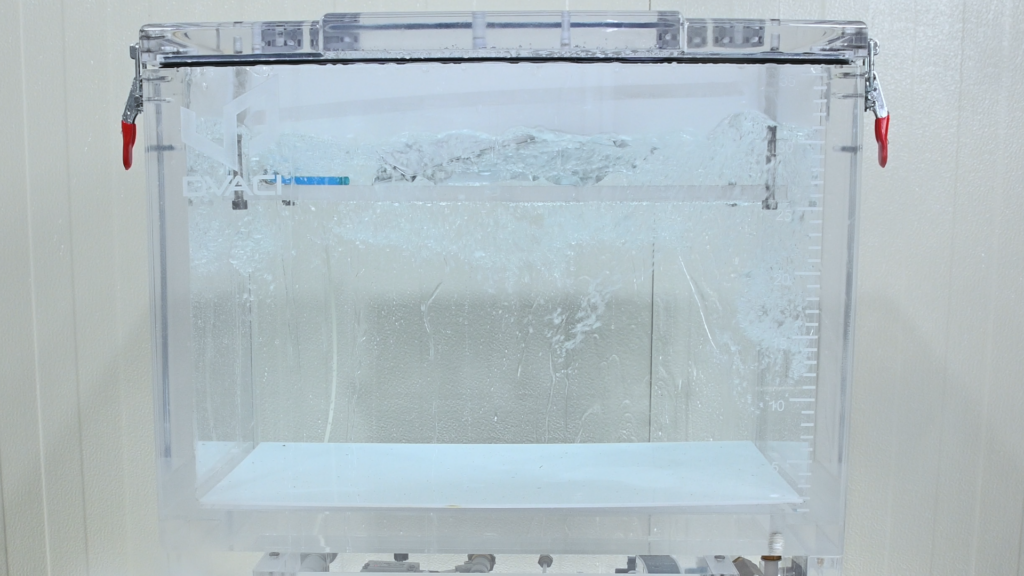
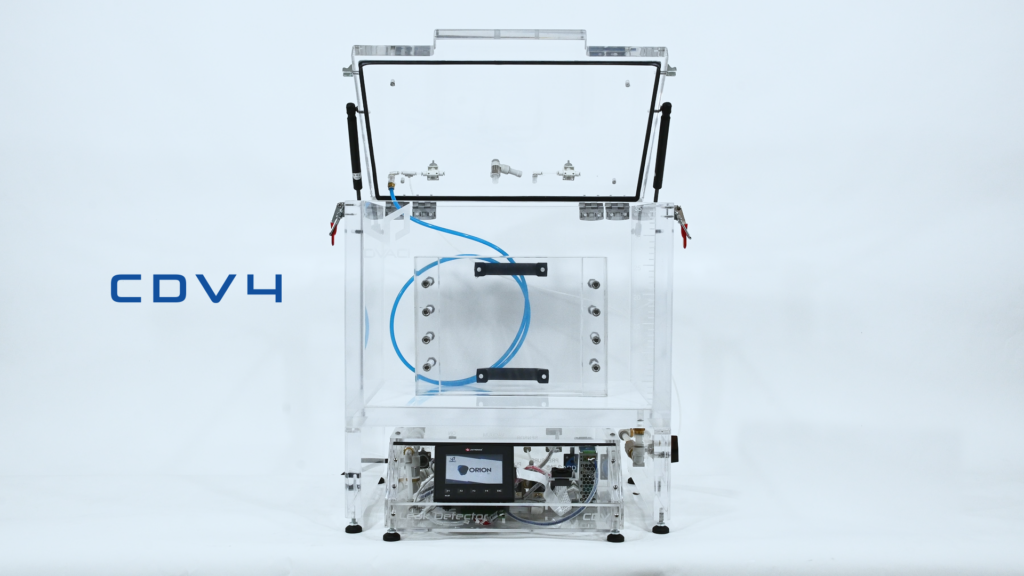
CDV 4 chamber with Model P control
The implemented solution used a CDV 4 with a Model P control system adapted for the required two-stage protocol. The project was developed in collaboration with DVACI's U.S. distributor, Thwing-Albert.
The Model P platform managed the pressure sequence and allowed the leak-integrity and seal-strength stages to be executed as one controlled workflow while preserving their separate evaluation objectives.
- Programmed pressure stages
- Controlled ramp rate
- Defined timing sequence
- Application-specific hardware
Define the protocol around the real package.
A combined test is only meaningful when the complete package–fixture–pressure system and both decision criteria are established.
One programmed sequence can contain two test stages, but it does not turn two ASTM methods into one result. Leak integrity and burst strength remain separate package-performance questions.
Internal Pressurization and Burst Test FAQ
What is the difference between ASTM F2095 and ASTM F2054?
ASTM F2095 addresses pressure-decay leak testing of flexible packages. ASTM F2054/F2054M evaluates minimum burst strength of flexible-package perimeter seals using internal air pressure within restraining plates.
Can both tests run in one programmed sequence?
They can potentially be sequenced when the equipment and package fixture are engineered for both stages. Each stage still needs its own method, parameters and acceptance criteria.
Are 5 psi and 25 psi required by the standards?
No. Those pressures and the 1 psi/s ramp were requirements for the project described in this case study. Other packages may require different conditions.
Is burst testing destructive?
Yes when the test continues until seal or package failure. Samples used for burst testing should not be returned to production.
Can a standard CDV chamber perform this combined protocol?
Not automatically. DVACI must evaluate chamber ratings, internal-pressure hardware, fixtures, controls and safety requirements before confirming a configuration.
Evaluate your package and pressure protocol with DVACI.
Share the package format, pressure stages, target standards and acceptance criteria with the application team.
Latest Articles
News, technical guides and insights on package leak testing.