Leak Test App for Automated and Traceable Package Testing
The DVACI Leak Test App standardizes package leak-test execution through controlled recipes, automated cycles and structured result records on the Model P controller.
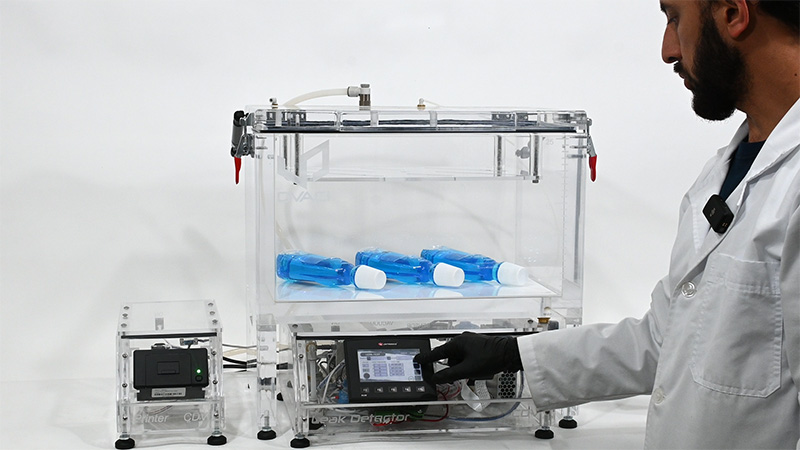
Operators select the appropriate product recipe and observe the package while the application controls vacuum, pressure and time according to the approved configuration.
What Is the Leak Test App?
It is a Model P application for configuring, selecting, executing and documenting package leak-test recipes. Administrators manage the test parameters; operators run the assigned recipe through a simplified workflow.
The available cycle functions depend on the connected chamber, pressure hardware, accessories and validated test procedure.
Reduce variation without removing operator observation.
When operators adjust vacuum and timing for every test, results can depend on individual setup and execution. Manual transcription also makes test history harder to review.
The application separates responsibilities: administrators define recipes and permissions, the system executes the cycle and the operator observes the package for the indication specified by the method.
- Consistent test parameters
- Controlled access by role
- Repeatable cycle execution
- Structured test documentation
Give each package its approved test configuration.
A recipe can define the test sequence and operating parameters required for a particular product or package format.
Create the recipe
Associate the package with its required method and parameter set.
Define the cycle
Configure vacuum or pressure levels, timing and applicable repetitions.
Control changes
Limit recipe editing to authorized administrative users.
Run consistently
Allow operators to select and execute the approved recipe.
Connect product identification with recipe selection.
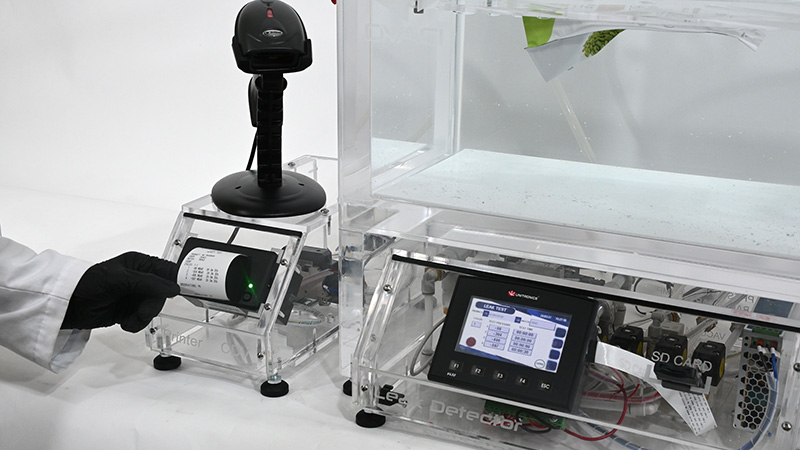
A compatible barcode reader can be integrated so scanning the product calls the corresponding test recipe. This reduces reliance on manual searching and helps prevent selection of an unrelated configuration.
Barcode logic and recipe associations must be configured and verified as part of the user's controlled process.
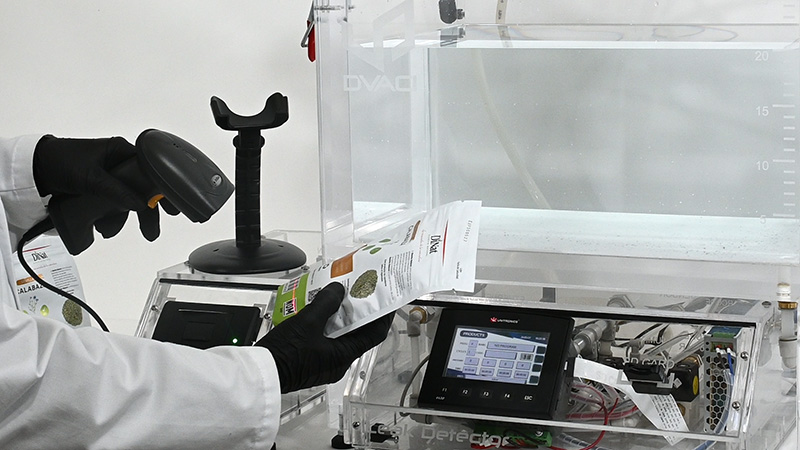
Build more than a single-level vacuum test.
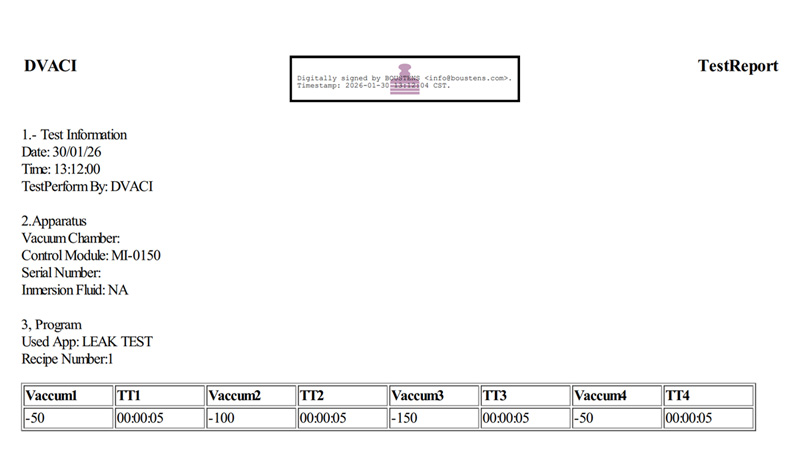
Leak Test App can configure up to four vacuum levels in one recipe. With the appropriate Model P hardware, a sequence may also combine vacuum and pressure or repeat cycles to evaluate package behavior under changing conditions.
Once started, the system controls the programmed sequence so the operator can concentrate on the visual or procedural observation required by the method.
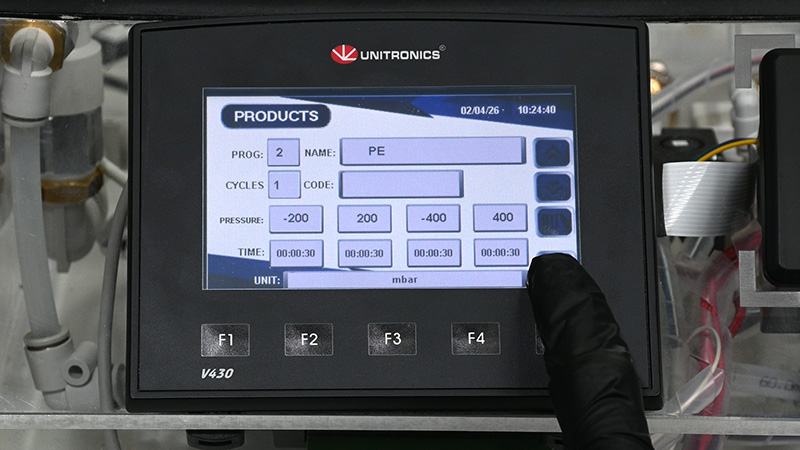
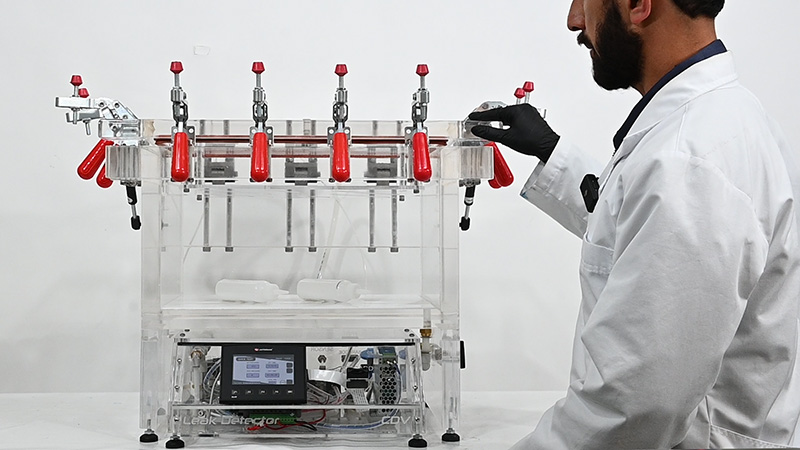
Adapt the sequence to different package behaviors.
Some packages respond to external vacuum, while others require internal or external positive pressure. Appropriate configurations can incorporate both types of stages in the same programmed workflow.
The software does not determine the correct method automatically. The user must establish the test approach, limits and acceptance criteria for the package.
Automate the conditions while the operator evaluates the indication.
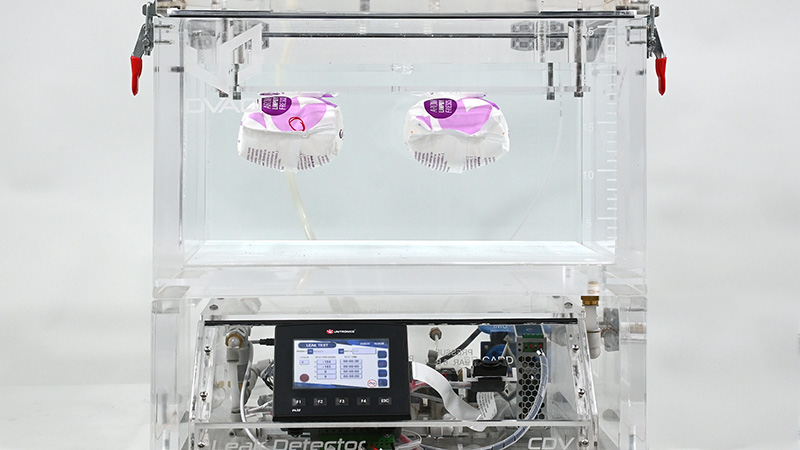
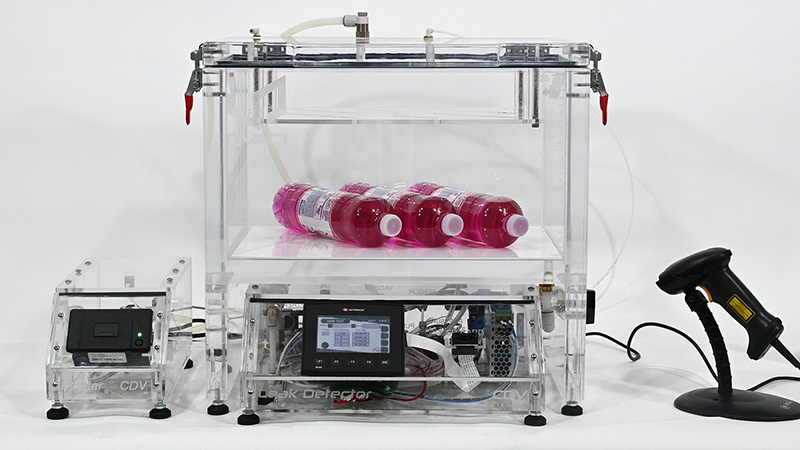
These are visual methods: automated pressure control improves consistency, but the result can still depend on observation, package behavior and the approved procedure.
Connect each result with its test context.
The application can record information such as operator, date, time, lot number, selected recipe and test parameters for later review.
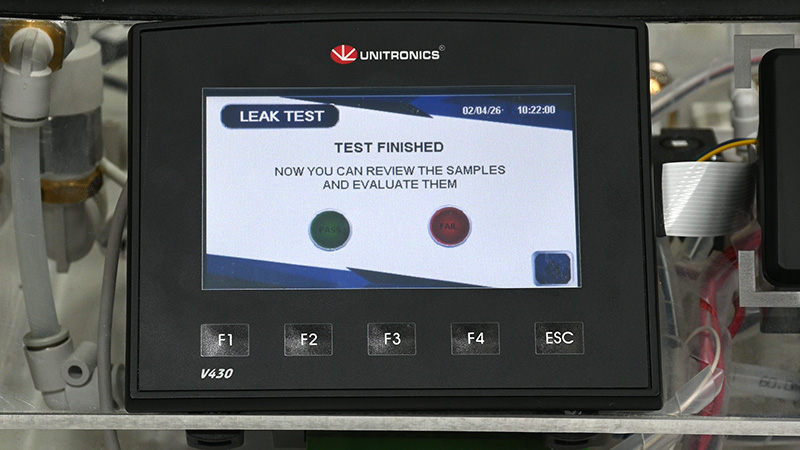
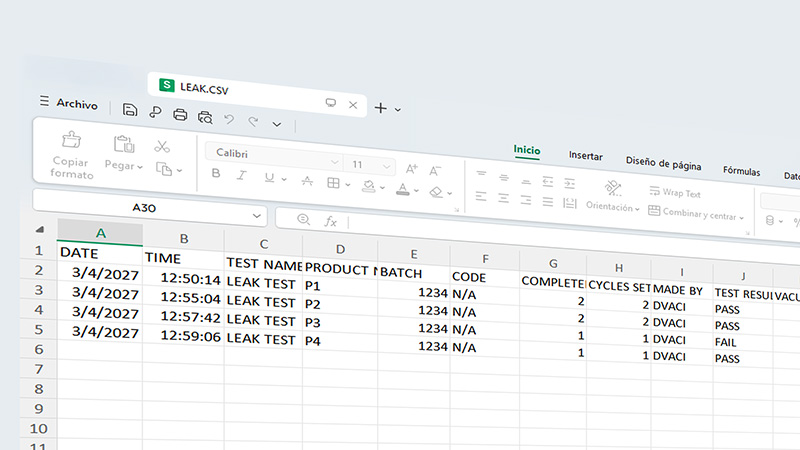
Generate PDF reports with electronic verification.
The application can generate PDF reports with an electronic signature or seal. A later modification can invalidate that verification, helping reviewers identify that the exported document no longer matches the originally signed version.
This feature supports record integrity, but regulatory compliance depends on the complete system: validation, access controls, procedures, record retention, audit strategy and the user's quality system.
Regulatory note: Do not describe the application as “21 CFR Part 11 compliant” unless the supplied configuration, validation package and intended use have been formally assessed for the customer's regulated environment.
Automation standardizes how the cycle is executed. A reliable leak-testing process still depends on the correct recipe, trained observation, validated criteria and controlled data practices.
Leak Test App FAQ
Which controller includes the Leak Test App?
The application is available on DVACI's Model P control platform. The final functionality depends on the connected chamber, hardware and selected options.
How many vacuum levels can one recipe contain?
The application can configure up to four vacuum levels within a single test cycle.
Can a barcode select the test recipe?
Yes, a compatible barcode workflow can be integrated to associate a product identifier with its corresponding recipe.
Does automation eliminate visual inspection?
No. For visual bubble-emission and dry-seepage methods, the application controls the cycle while the trained operator evaluates the required indication.
Are PDF reports automatically compliant with 21 CFR Part 11?
No. Electronic verification is one technical control. Compliance depends on the complete configured system, validation, procedures, user management and record lifecycle.
Evaluate Leak Test App with your packages and procedures.
Share your package formats, test methods, recipe requirements and documentation needs with DVACI.
Latest Articles
News, technical guides and insights on package leak testing.