Why Dye Immersion Leak Testing Is Still Used
In the previous episode, we saw that dye immersion testing is probabilistic, while deterministic methods also have physical limits. So why is the dye test still used? The answer is practical: it gives people visible evidence, and it gives laboratories an accessible way to begin testing.
Proof you can see
A dye immersion leak test turns a hidden leak path into a visible indication. After the pressure cycle, the question is direct: did the colored tracer enter through the defect or not?
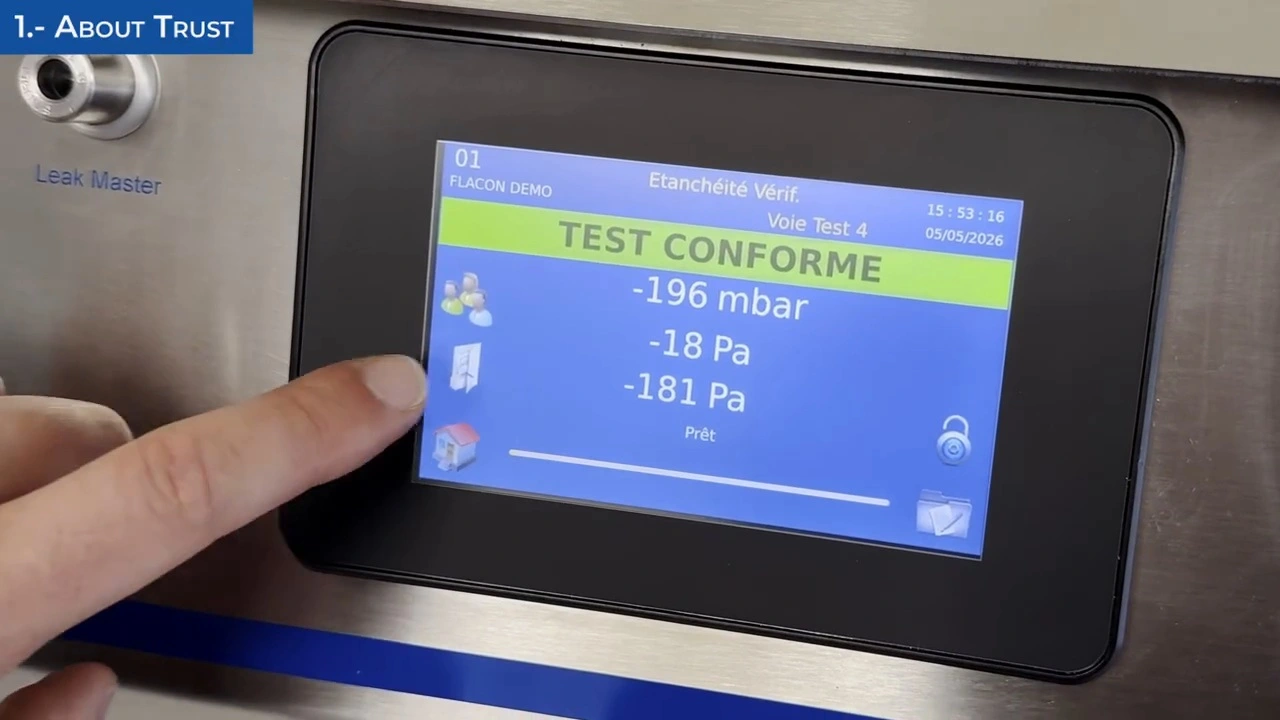
A screen reading can be highly useful, but it still asks the user to trust the instrument, calibration, software and measurement chain. A dye indication gives an auditor, a development team or a quality group physical evidence they can inspect directly.
Proof that remains accessible
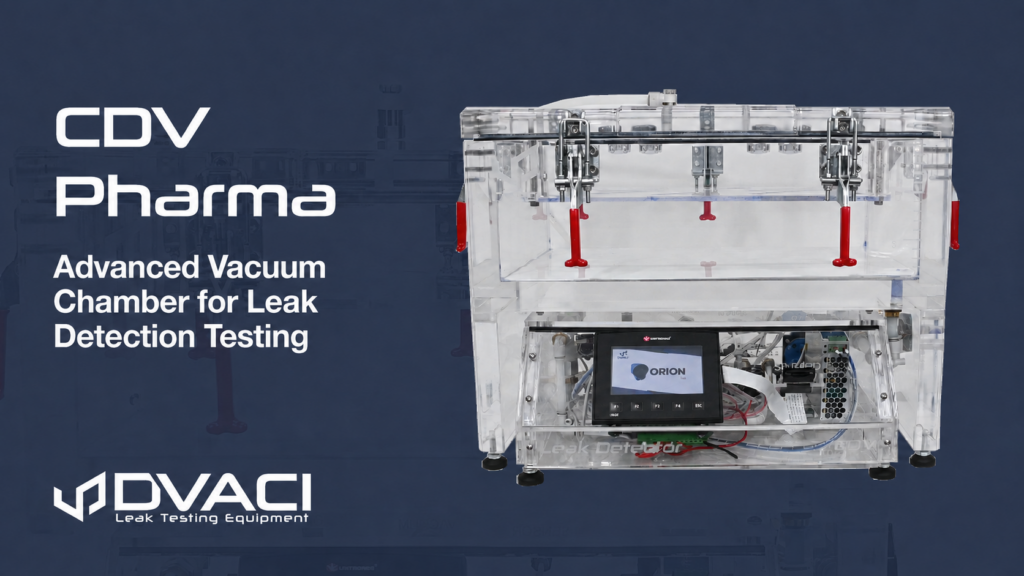
A basic dye immersion setup requires a chamber, a vacuum source and the tracer liquid. That makes it one of the most accessible ways for a laboratory to start package integrity testing.
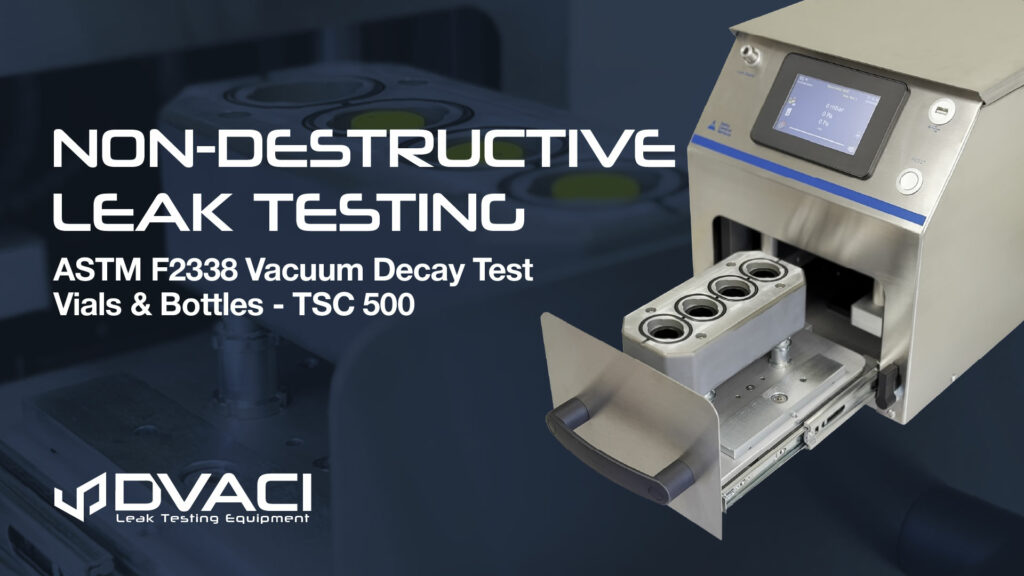
Vacuum decay adds sensors, controlled measurement and data processing. Helium leak detection adds another level of equipment and operating cost. Those methods can provide valuable information, but the technical gain comes with a substantially higher investment.
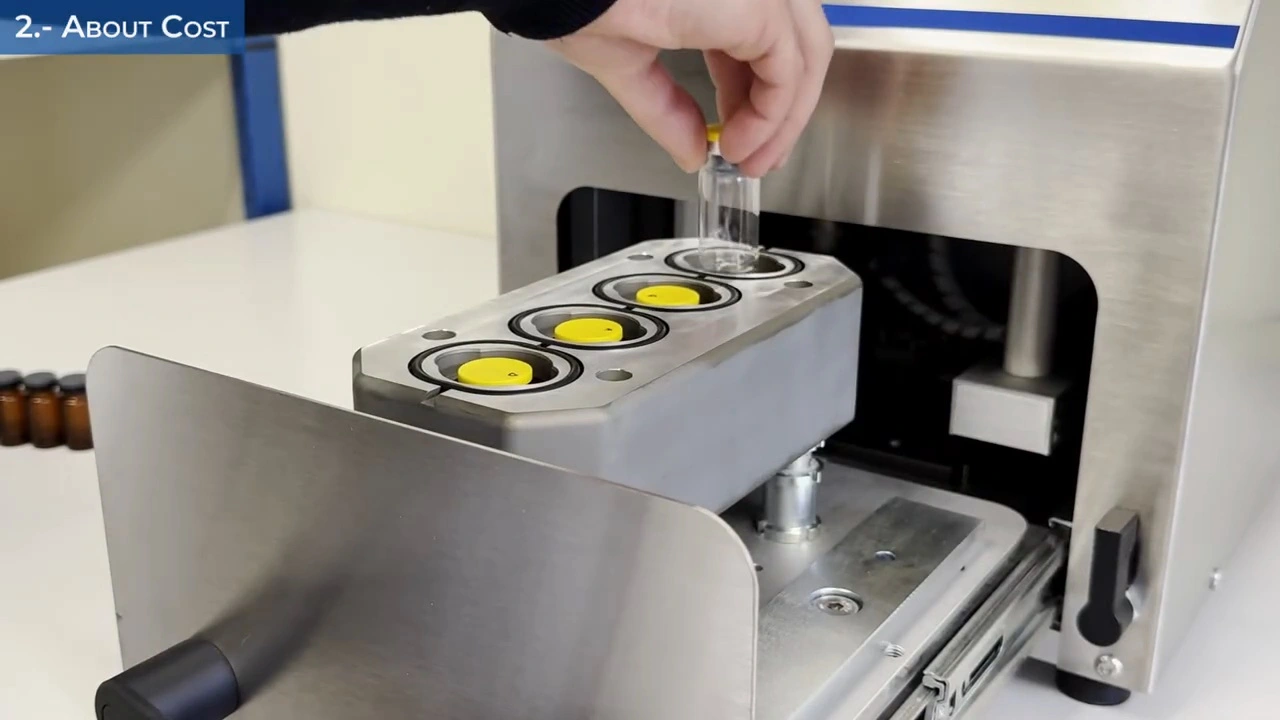
For many laboratories, the cost difference is not a small purchasing detail. It is the difference between testing and not testing at all.
Different methods answer different questions.
| What matters | Dye immersion | Vacuum decay | Helium leak detection |
|---|---|---|---|
| Primary evidence | Visible tracer ingress or staining | Measured pressure response | Measured tracer-gas leak rate |
| Typical strength | Direct visual proof and accessible setup | Quantitative, non-destructive measurement | Very high sensitivity and quantitative output |
| Practical limitation | Destructive and dependent on the detection chain | Signal can approach noise and temperature effects | Higher equipment and operating complexity |
| Useful role | Development, troubleshooting and selected official tests | Validation, routine inspection and non-destructive testing | Specialized high-sensitivity applications |
The method changed around the dye.
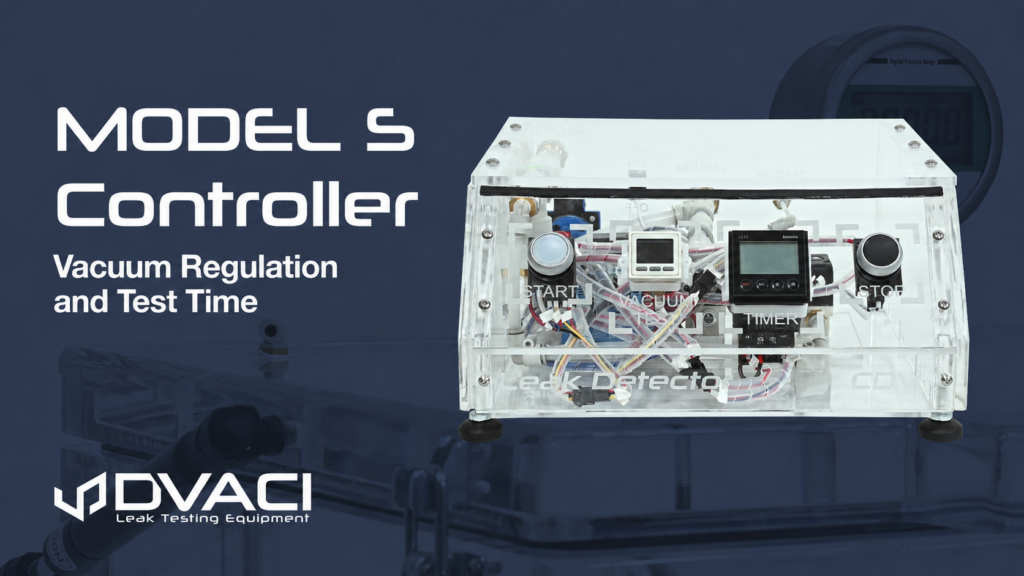
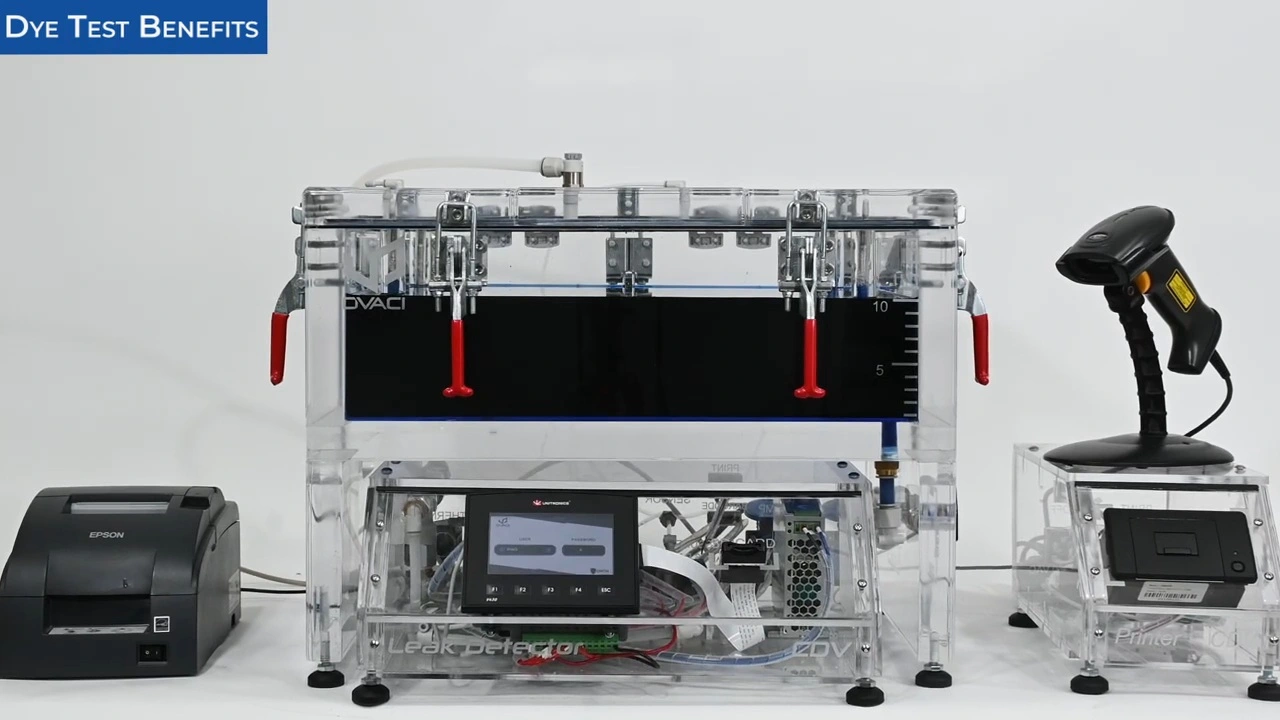
The classic principle remains recognizable, but the surrounding system can be much more controlled than a basic manual test. Modern dye immersion equipment can add repeatable cycles, pressure control, operator guidance and traceability without changing the underlying visual logic.
Defined vacuum and pressure parameters help reduce variation between operators and test cycles.
Timers, programmable recipes and controlled sequences make the method easier to standardize.
Printers, barcode readers and electronic reports can connect the test result with the sample and procedure.
When does dye immersion make sense?
You need visible evidence that can be inspected and explained.
You are working in development or troubleshooting.
The method is appropriate for the package and relevant defect.
The sample can be sacrificed after testing.
The laboratory needs an accessible starting point.
Your procedure defines and validates the critical parameters.
Not a relic — a practical method with a modern role.
Dye immersion leak testing endures because it combines visible evidence with an accessible path into package integrity testing. It does not replace every deterministic method, and it should not be selected without validation. But when the package, defect, lifecycle stage and decision permit it, a modernized dye system remains a credible and useful tool.
Frequently Asked Questions: Dye Immersion Leak Testing
- Is dye immersion leak testing deterministic or probabilistic?
- Dye immersion is generally categorized as a probabilistic method. Detection depends on wetting, surface tension, transport through the leak path and whether enough tracer reaches a visible location.
- Does USP <1207> prohibit probabilistic methods?
- No. The chapter expresses a preference for deterministic methods when feasible, but probabilistic methods can remain applicable when a deterministic method is not suitable for the product or package configuration.
- What is the main advantage of a deterministic leak tester?
- A deterministic tester measures a physical response, such as pressure change or mass flow, and provides a quantitative result whose metrological uncertainty can be characterized.
- Why is dye immersion still used if deterministic methods exist?
- It combines direct visual evidence with an accessible setup. That can be valuable for development, troubleshooting and selected applications when the method is appropriate and validated.
- Is dye immersion testing destructive?
- In general, yes. The sample is usually sacrificed during the procedure, so destructive testing must be acceptable for the test objective and study design.
The method may be familiar, but the rulebook can look complicated. In the next episode, we begin sorting the standards and showing which documents describe the same underlying test principle.
Latest Articles
News, technical guides and insights on package leak testing.