ASTM F2338 Vacuum Decay Leak Testing for Pharmaceutical Containers | TSC 500
Non-Destructive Leak Detection for Small Pharmaceutical Containers
In pharmaceutical packaging, detecting leaks in small containers such as bottles or vials requires sensitivity, reliability, and efficiency. ASTM F2338 provides an important reference for non-destructive leak detection using the vacuum decay method.
For this application, the TSC 500 offers a practical solution for testing small pharmaceutical containers without destroying the product or slowing down the process.
In this tutorial, you’ll learn:
- Why non-destructive leak testing is important for pharmaceutical vials and bottles.
- How ASTM F2338 relates to vacuum decay leak detection.
- How the TSC 500 performs vacuum decay and pressure decay testing.
- Why testing multiple products at the same time can improve batch inspection efficiency.
- How traceability and data management support pharmaceutical quality processes.
Standard Mentioned
ASTM F2338 – Standard Test Method for Nondestructive Detection of Leaks in Packages by Vacuum Decay Method.
You can also explore more DVACI content related to ASTM standards for leak testing and package integrity. Our technical articles cover different test methods, applications, and practical recommendations to help quality teams select the most suitable approach for their products and processes.
The Challenge: Detecting Leaks Without Destroying the Product
ASTM F2338 is used for non-destructive leak detection in packages through vacuum decay testing. Instead of using dye, water immersion, or destructive inspection, this method evaluates pressure changes inside a test chamber.
When a package is exposed to vacuum, a leak can produce a measurable change in chamber pressure. In many pharmaceutical processes, small containers must be inspected without damaging them.
This is common when working with:
- Vials.
- Small bottles.
- Rigid pharmaceutical containers.
- High-value products
- Samples from validated production batches.
Traditional destructive tests can be useful in some scenarios, but they are not always ideal when the goal is to preserve the product, reduce waste, or evaluate multiple samples efficiently.
That is where non-destructive vacuum decay testing becomes especially relevant.
How the TSC 500 Supports ASTM F2338 Applications
To illustrate this approach in practical terms, we are using the TSC 500.
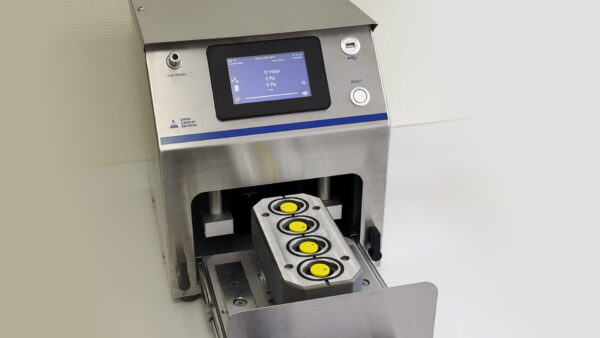
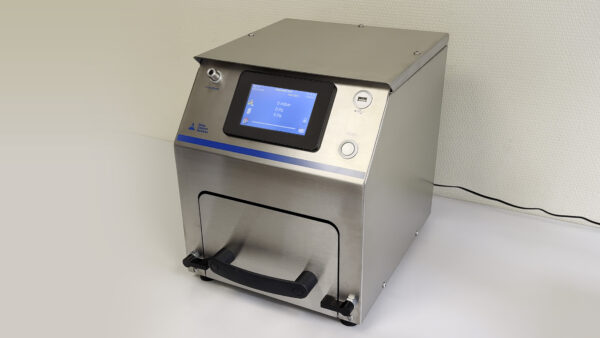
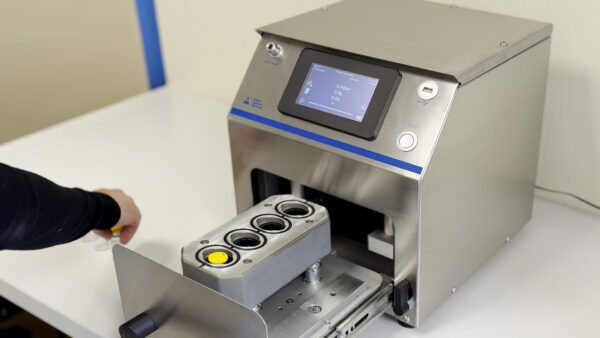
The TSC 500 is designed for non-destructive testing of small pharmaceutical containers, in line with the applications covered by ASTM F2338.
The system operates through leak detection by vacuum decay or pressure decay, using a differential measurement sensitive to the pascal.
Its test cycle follows a precise sequence:
- Vacuum generation
- Stabilization
- Test
- Verification
- Return to atmospheric pressure
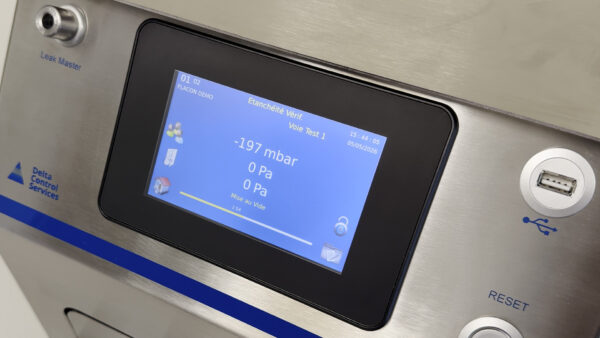
This controlled sequence is designed to deliver reliable and repeatable measurements, while helping operators maintain a standardized process.
Designed for Small Containers and Faster Cycles
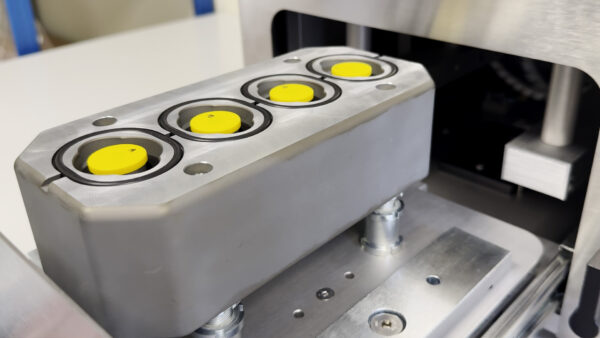
The TSC 500 integrates a vacuum pump with electronic regulation down to -700 mbar. Its reduced internal volume helps improve both cycle speed and measurement sensitivity. This is important because smaller chamber volumes can allow the system to stabilize faster and detect pressure variations more efficiently.
The system also includes integrated sealing mechanics and a drawer-based closing system, making daily operation easier for production and quality teams.
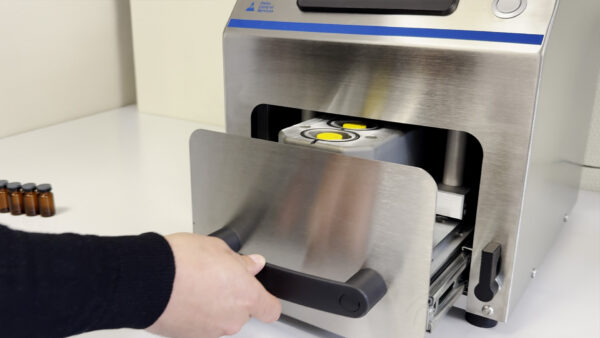
For laboratories and manufacturing environments, usability matters. A test system should not only be sensitive; it should also be practical, repeatable, and easy for operators to use during routine inspection.
Industrial Features for Pharmaceutical Quality Control
Designed for industrial use, the TSC 500 includes:
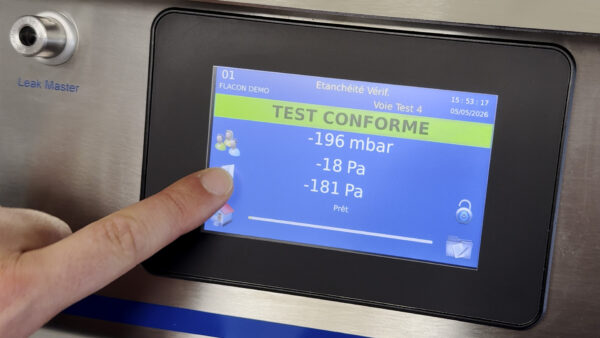
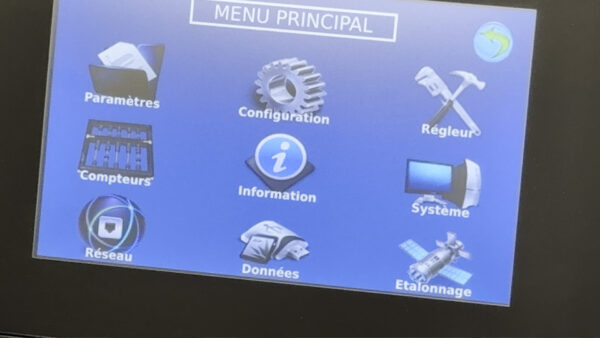
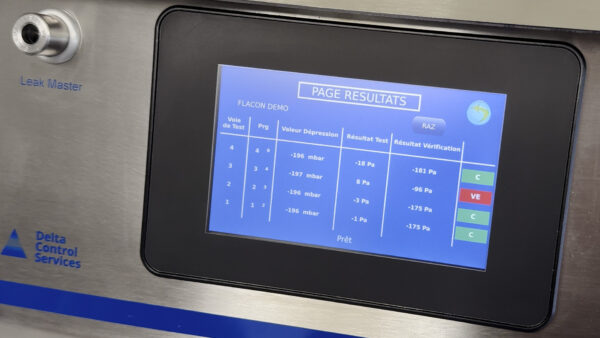
- 5-inch color touchscreen.
- 64 test programs.
- USB data export.
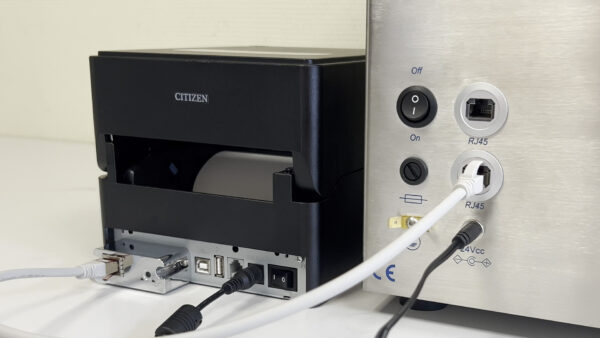
- RJ45 connectivity.
- Optional serial printer.
- Integrated vacuum pump.
- Electronic vacuum regulation.
- Audit Trail functionality for traceability.
The Audit Trail functionality helps strengthen traceability by supporting controlled records of system activity, test execution, and process history. This is especially important when companies need to align equipment operation with data integrity practices and FDA 21 CFR Part 11 requirements.
The Next Challenge: Testing More Efficiently
Today, the challenge is not only to test better. It is also to test more efficiently.
Imagine having to inspect more than 100 bottles to release a production batch. In that situation, every second counts.
If each container must be tested one by one, the total inspection time can quickly become a bottleneck for the quality team.
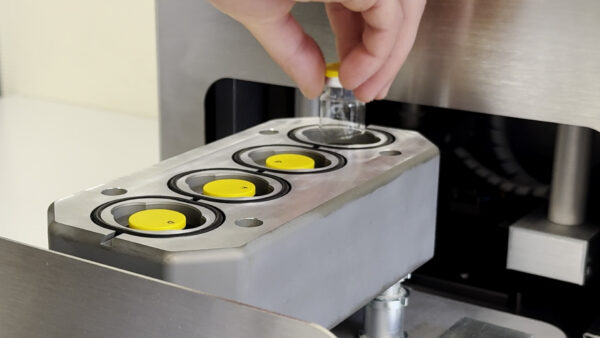
Because the TSC 500 can test up to four products at the same time, it becomes possible to reduce the time required to inspect a complete sample batch while maintaining the sensitivity and reliability expected in the pharmaceutical industry.
Up to 50% Time Savings in Batch Inspection
When multiple containers can be tested in parallel, operators can process sample batches more efficiently.
With the TSC 500, users can achieve up to 50% time savings, depending on the application, test configuration, sample geometry, and inspection routine.
This can help pharmaceutical teams:
- Reduce total batch inspection time.
- Improve operator productivity.
- Maintain repeatable test conditions.
- Support faster quality decisions.
- Optimize routine leak testing workflows.
Supporting Validation and Configuration Selection
Each pharmaceutical package behaves differently. Container size, rigidity, closure system, product characteristics, and expected defect type can all influence the test method and parameters.
At DVACI, we support each project by evaluating the application before defining the final configuration.
This process may include:
- Needs assessment.
- Review of container type and geometry.
- Evaluation of testing constraints.
- Configuration selection.
- Equipment installation.
- Process support.
- Validation guidance for the application.
In addition to the TSC 500, DVACI offers a wide range of leak testing equipment and vacuum chamber solutions designed for different package types, industries, and testing methods. Explore our equipment options to find the configuration that best fits your application, production requirements, and quality control process.
Evaluate This Approach on Your Own Products
Contact DVACI to discuss your testing needs, your product characteristics, and the configuration best suited to your application.
Our technical team can help you define the right approach for non-destructive leak detection, batch inspection efficiency, and pharmaceutical quality control.
We can help you. Contact us!