
Package Leak Tester: How to Choose the Right Method
A package leak tester shows where a seal or closure leaks. The right one depends on your package and your test objective, not only on the size of the chamber.
This guide compares the main methods, from bubble emission to dry chamber and internal pressurization, and links each one to its standard. If you are looking for a leak testing machine for packaging, start with the package type below.
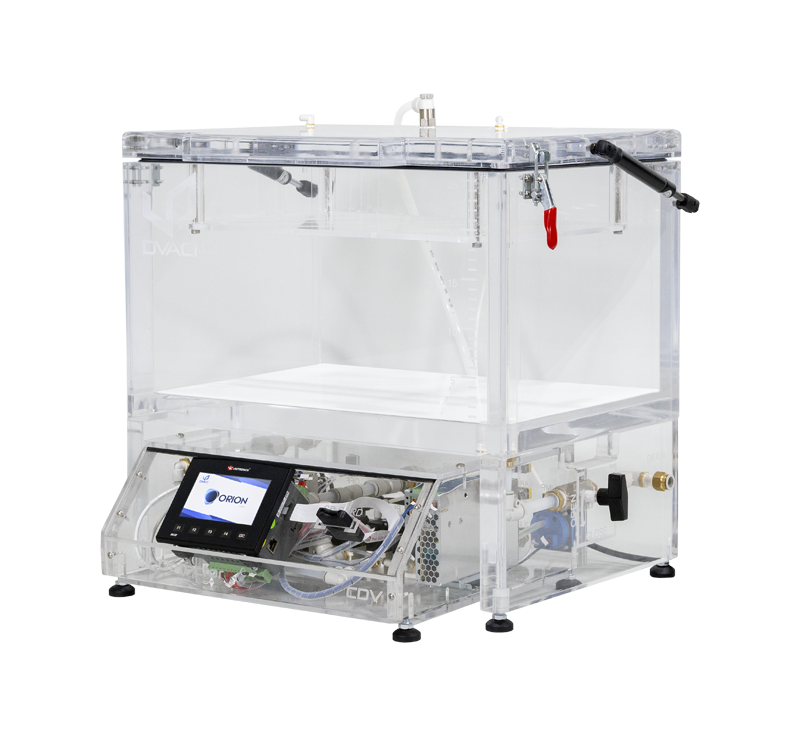
Which Package Leak Tester Fits Your Package
Each package type points to a different method and a different standard.
Flexible pouches and sachets
Bubble emission testing under ASTM D3078 shows where a flexible package leaks. Read the ASTM D3078 leak tester guide, or the pouch leak tester page for sachets and stick packs with almost no air inside.
Rigid, liquid-filled containers
A dry chamber test looks for liquid on the outside of a container instead of bubbles. See plastic bottle leak testing: ASTM D5094 vs ASTM D3078. ASTM lists D5094 as withdrawn, so confirm which standard your customer or regulator requires.
Empty rigid containers
ASTM D4991 covers leakage testing of empty rigid containers by vacuum, for example containers used for hazardous liquids. Read ASTM D4991: ensuring rigid container integrity.
Packages that can be pressurized
ASTM F2096 detects gross leaks by internal pressurization, with the package submerged. See ASTM F2096: how to define pressure and time.
Transport and altitude
ASTM D6653 simulates altitude to check how a package behaves at lower pressure. Read ASTM D6653 for packaging integrity during transportation.
Sterile and pharmaceutical packaging
For sterile barrier and pharmaceutical packages, the method has to be defined and validated against your own requirements. See sterile product package integrity testing with CDV Pharma.
Package Leak Testing Methods Compared
For a full explanation of each test, see the package leak testing methods page.
| Method | Standard | Typical package | What you see | Result type |
|---|---|---|---|---|
| Bubble emission | ASTM D3078 | Flexible packages | Bubbles from the leak point in water | Visual, probabilistic |
| Dry chamber | ASTM D5094 (withdrawn) | Rigid, liquid-filled containers | Liquid on the outside of the container | Visual, probabilistic |
| Internal pressurization | ASTM F2096 | Packages that can be pressurized | Bubbles from a pressurized package under water | Visual, gross leaks |
| Empty container vacuum | ASTM D4991 | Empty rigid containers | Leakage under differential pressure | Method-dependent |
| Altitude simulation | ASTM D6653 | Packages shipped by air or at altitude | Package behavior at lower pressure | Method-dependent |
Technical note: Visual vacuum leak testing is method-dependent; it should not be described as a universal substitute for quantitative or validated package integrity tests.
How to Choose a Package Leak Tester in Four Steps
Identify the package
Flexible pouch, sealed tray, bottle, jar or tube? Package geometry, fill product and seal design decide which method is realistic.
Select the test method
Choose bubble emission when you need to see where the leak is, or evaluate a dry test for suitable liquid-filled containers. Match the procedure to your test objective.
Define the chamber and controls
Check the largest package, samples per cycle, target vacuum, hold time and operator workflow. Compare the CDV BT and CDV FS and the manual, semi-automatic and PLC controls.
Validate with your samples
Confirm the method works with your product, packaging material and acceptance criteria, using known good and known defective samples, before you specify equipment.
Package Leak Tester FAQ
A package leak tester is the equipment used to check whether a sealed package leaks. DVACI’s CDV vacuum chambers lower the pressure around the package so a leak shows up as bubbles in water or as visible product seepage.
ASTM D3078 describes bubble emission leak testing for flexible packaging. Other methods apply to other package formats and test objectives, so match the method to your package and your goal.
In practice, yes: both terms describe equipment that tests a package for leaks. What changes is the method: visual bubble or dry tests, pressurization, or instrumented methods such as vacuum decay.
No. Vacuum decay (ASTM F2338) measures a pressure change with an instrument and is a deterministic method. CDV chambers rely on observation, so they are probabilistic (USP <1207>). Both can be part of a package integrity program when your risk assessment calls for it.
Wet immersion tests generally make the tested package unsuitable for sale. Dry tests may be non-destructive depending on the product and test conditions.
No single hold time fits every package. Define the vacuum and hold time with known good and known defective samples, then validate them in your own procedure.
Tell us about your package and we will help you choose
Share your package dimensions, the standard you need and your daily test volume. We will help you choose a CDV configuration.