
Vacuum Leak Tester for Packaging
Find seal failures, pinholes and closure defects before the batch leaves your plant.
DVACI manufactures package leak detection equipment for flexible and rigid packaging. Our CDV vacuum chamber leak testers support wet and dry visual testing, with five chamber sizes and three control systems.
Compare CDV Package Leak Testers
Choose your package leak tester by sample size, samples per cycle and required vacuum.
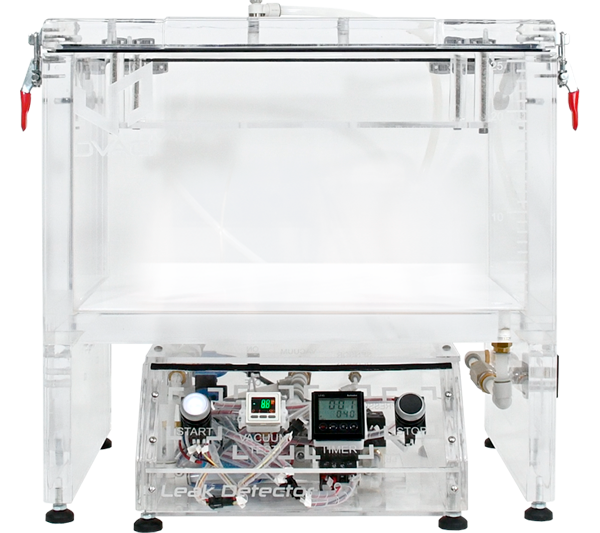
CDV BT Bench Top
Compact chambers with controls below the tank to save workspace.
- 11–20 in chamber width
- Up to -28.9 inHg
- Laboratory friendly
CDV FS Floor Stand
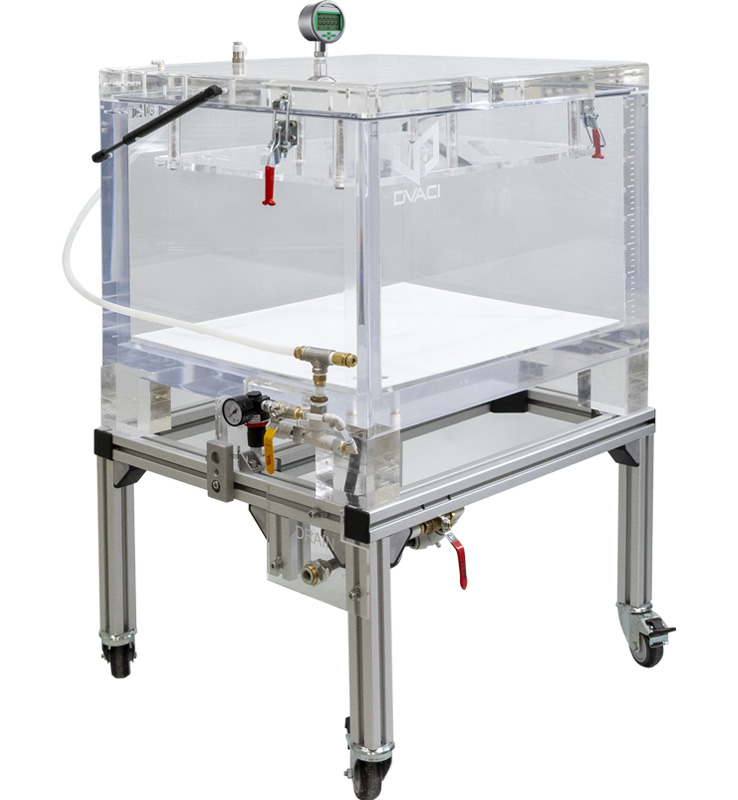
Large chambers for oversized packages or multiple samples per cycle.
- 24–31 in chamber width
- Up to -28 inHg
- Mobile floor stand
Compare the Five Standard Chamber Sizes
Compare chamber dimensions, maximum vacuum and weight.
CDV 2

- Inside chamber
- 11 × 8 × 8 in 28 × 20 × 20 cm
- Max. vacuum
- -28.9 inHg -980 mbar
- Weight
- 42 lb 19 kg
CDV 3

- Inside chamber
- 18 × 12 × 10 in 45 × 30 × 25 cm
- Max. vacuum
- -26.5 inHg -900 mbar
- Weight
- 84 lb 38 kg
CDV 4

- Inside chamber
- 20 × 14 × 14 in 50 × 35 × 35 cm
- Max. vacuum
- -22 inHg -750 mbar
- Weight
- 92 lb 42 kg
CDV 5

- Inside chamber
- 24 × 20 × 16 in 60 × 50 × 40 cm
- Max. vacuum
- -28 inHg -950 mbar
- Weight
- 232 lb 105 kg
CDV 6

- Inside chamber
- 31 × 24 × 20 in 80 × 60 × 50 cm
- Max. vacuum
- -22 inHg -750 mbar
- Weight
- 387 lb 175 kg
Maximum vacuum is specified at sea level. Plant altitude and vacuum source affect performance; confirm the required test level for your model.
Specialized CDV Configurations
Options for internal pressurization, pharmaceutical testing and altitude simulation.
Internal Pressurization Kit
Reveal gross leaks in low-headspace or vacuum-packed samples using controlled internal air pressure.
Explore internal pressurizationCDV Pharma
Pharmaceutical dye testing with stored results, user permissions and PDF reports. Optional 21 CFR Part 11 features depend on configuration and application validation.
Explore CDV PharmaCDV Pressure
Vacuum and pressure options for packaging exposed to air freight or changing altitude.
Learn about altitude testingThree Ways to Operate
Choose the control level according to test frequency, operator workflow and process requirements.
 M
Direct Operator Control
Simple control of vacuum and cycle duration for occasional or straightforward testing.
View Manual Control S
Automatic Vacuum Regulation
Automatic regulation maintains the selected vacuum. Timer features depend on configuration.
View Semi-Automatic P
Programmable Test Recipes
Touchscreen control and programmable sequences for high-frequency and standardized quality-control tests.
View PLC ControlHow a Vacuum Leak Tester Works
Lowering pressure around the sample reveals leaks as bubbles or visible product seepage.
Bubble Emission Leak Test
Submerge the package and apply vacuum: escaping bubbles reveal the leak location. Define vacuum and hold time for your package.
Learn about ASTM D3078Watch the explanation · ASTM D3078 vacuum and time guide
Dry Vacuum Leak Test
Without water, vacuum can reveal liquid seeping through a bottle, jar or tube seal.
Altitude Simulation
Simulate reduced atmospheric pressure during air freight or mountain transport.
Explore altitude testingPackage Leak Testing Standards
The appropriate method depends on the package format, product and quality-control objective.
Official references: ASTM D3078 · ASTM D6653/D6653M.
Bubble Emission
Leak detection in flexible packaging through visual bubble emission under vacuum.
Empty Rigid Containers
Leakage testing of empty rigid containers using a vacuum-based method.
Altitude Simulation
Evaluate packaging systems under reduced atmospheric pressure conditions.
Internal Pressurization ASTM F2096Gross Leak Detection
Bubble detection through controlled internal package pressurization.
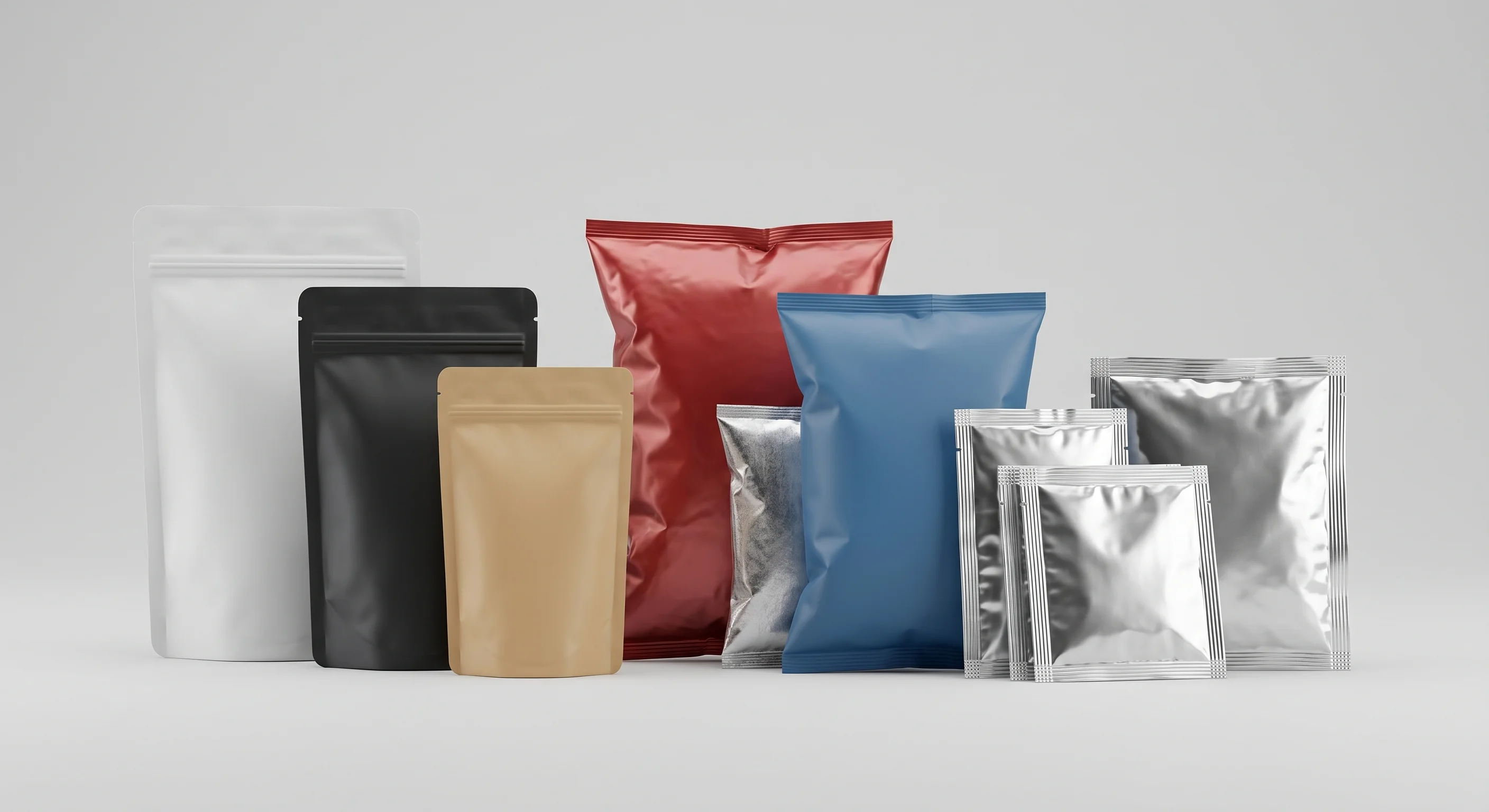
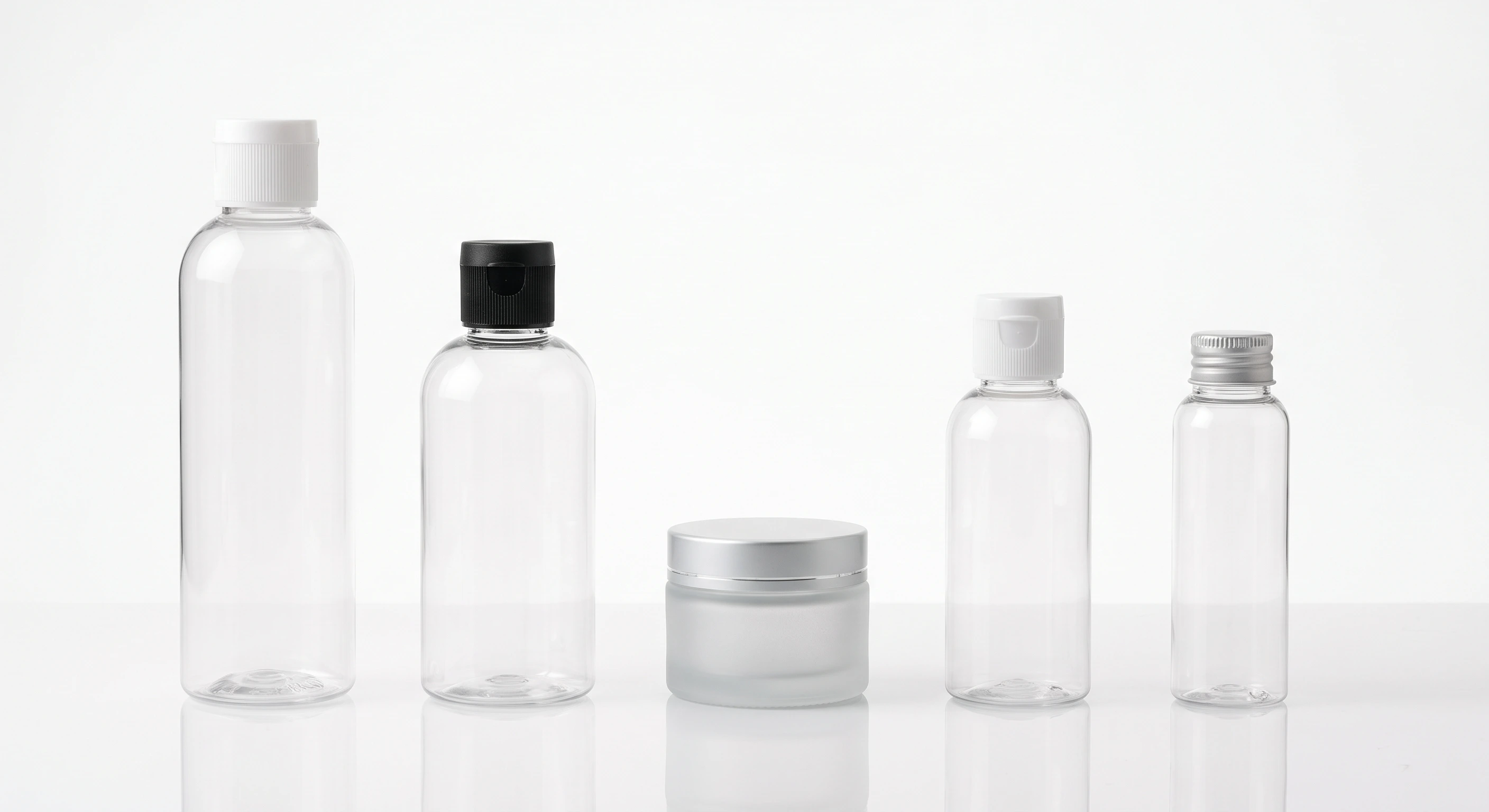
Leak Testing for Flexible and Rigid Packaging
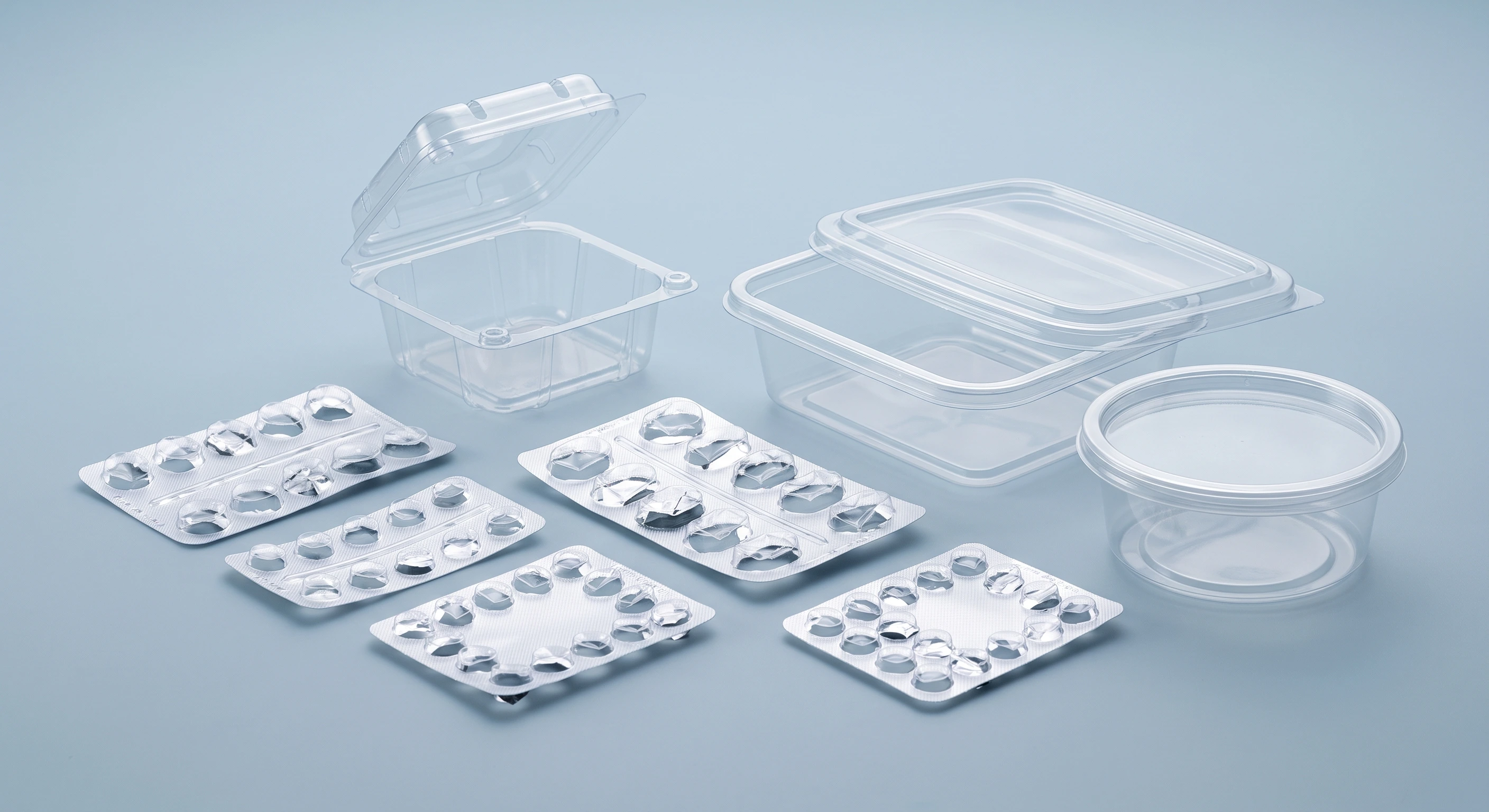
CDV vacuum chambers support flexible, rigid and thermoformed package formats across multiple industries.

Industries That Rely on Vacuum Leak Testing
CDV vacuum chambers support packaging inspection during incoming inspection, line qualification and routine quality-control activities.
Food & Beverage
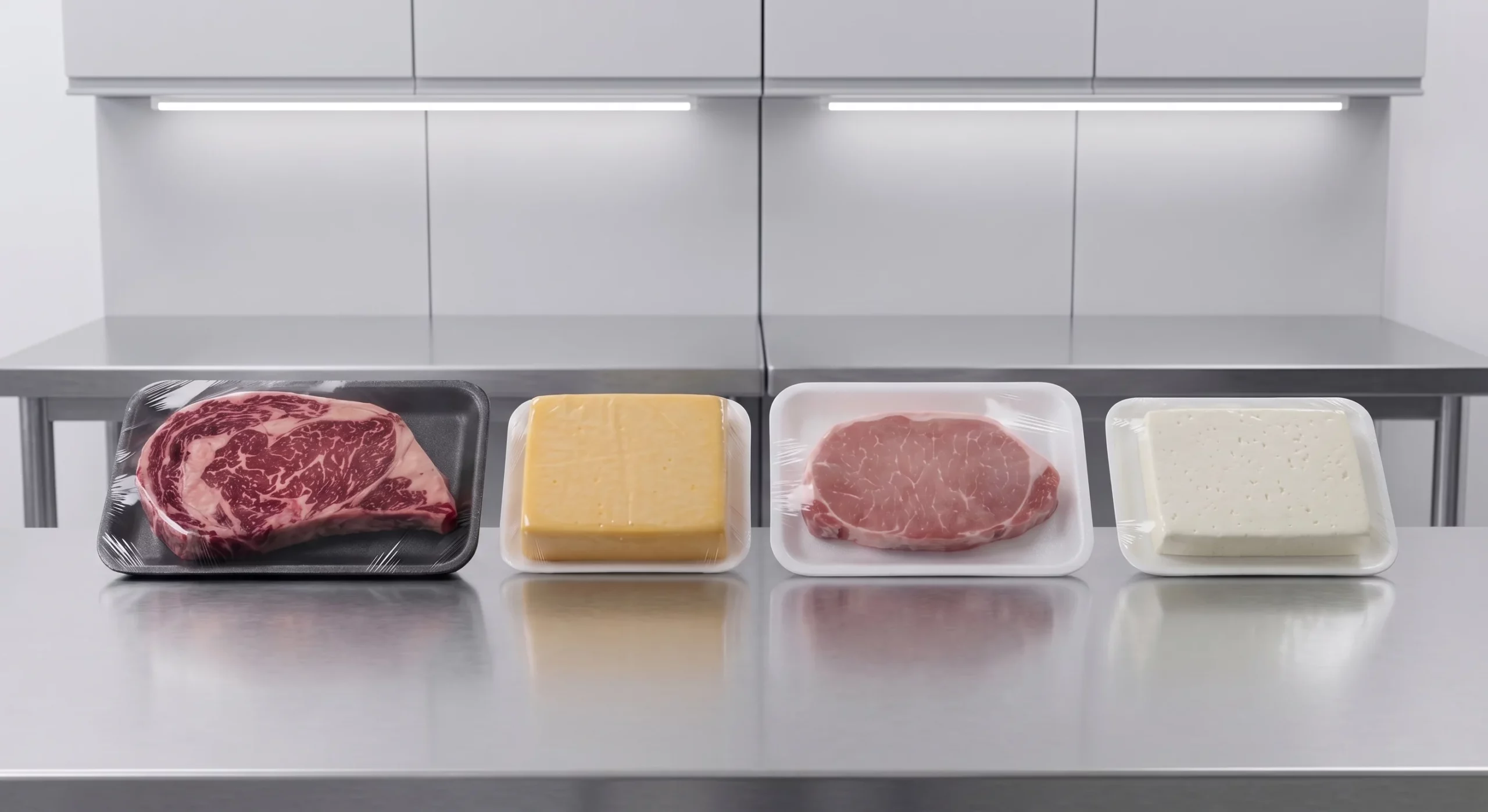
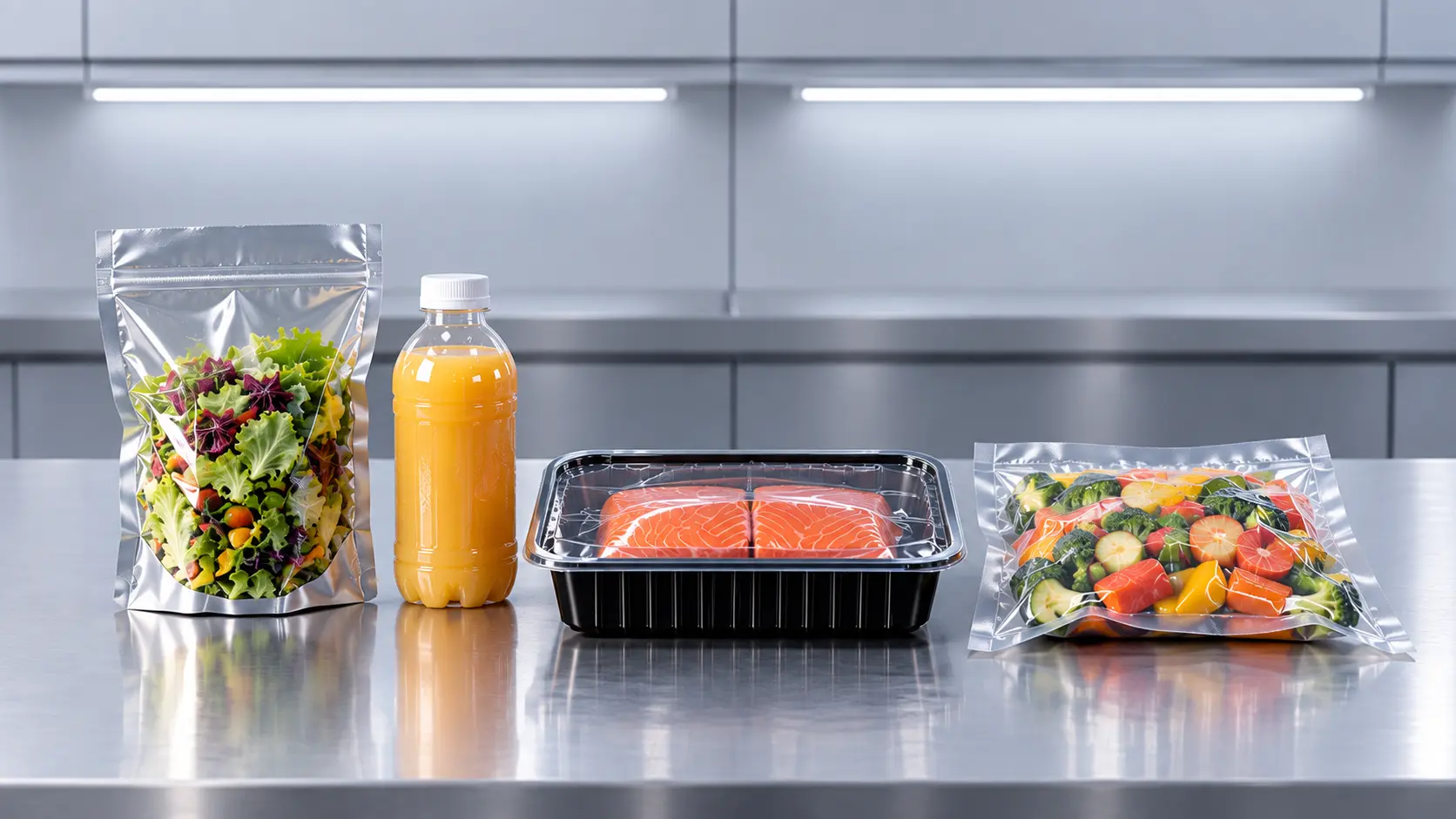
Pouches, trays, bottles, vacuum packs and modified-atmosphere packaging.
Pharmaceutical
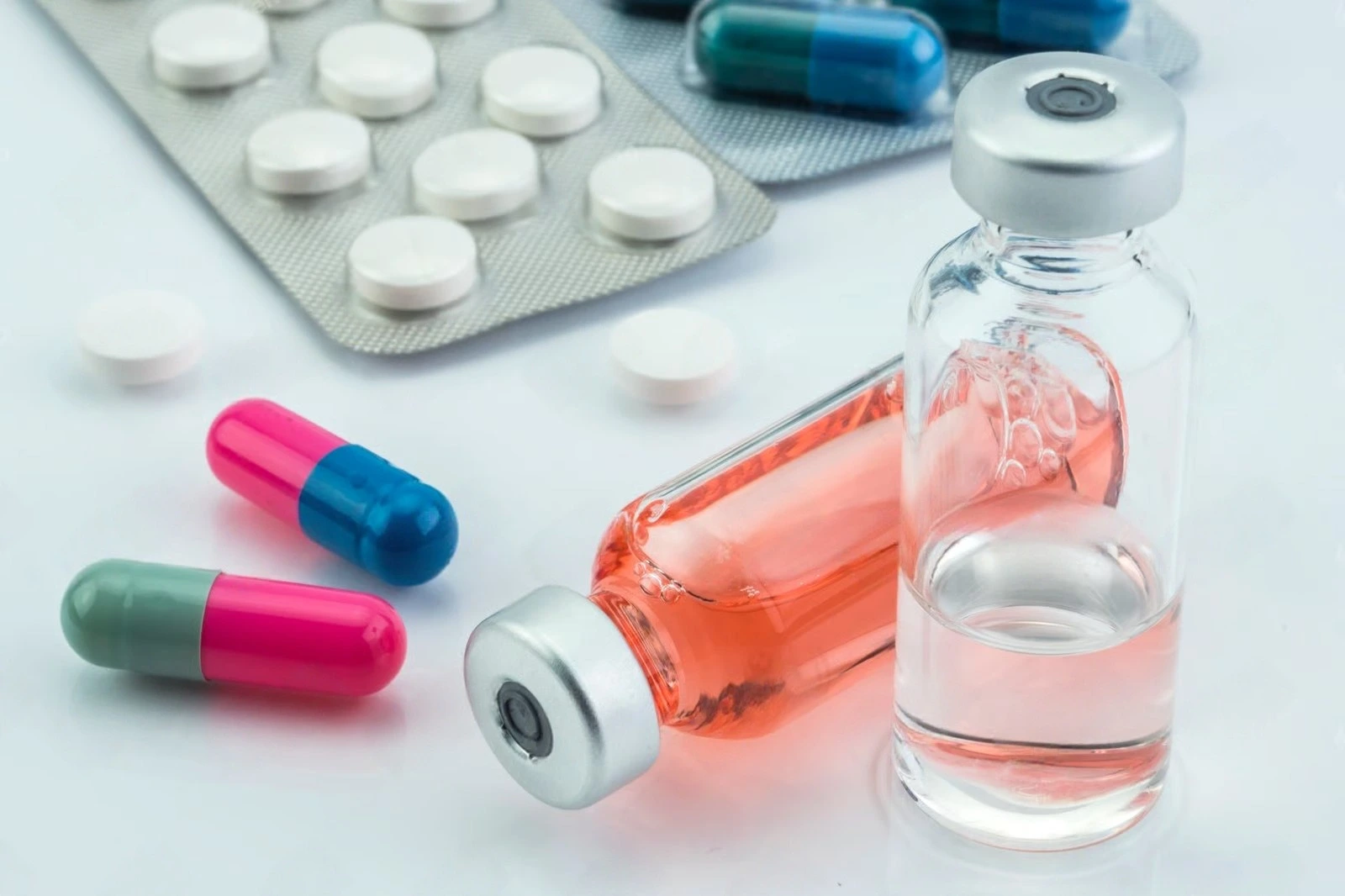
Vials, bottles, closures and pharmaceutical packaging configurations.

Cosmetics & Personal Care
Bottles, tubes, jars and other liquid-filled cosmetic and personal-care packaging.
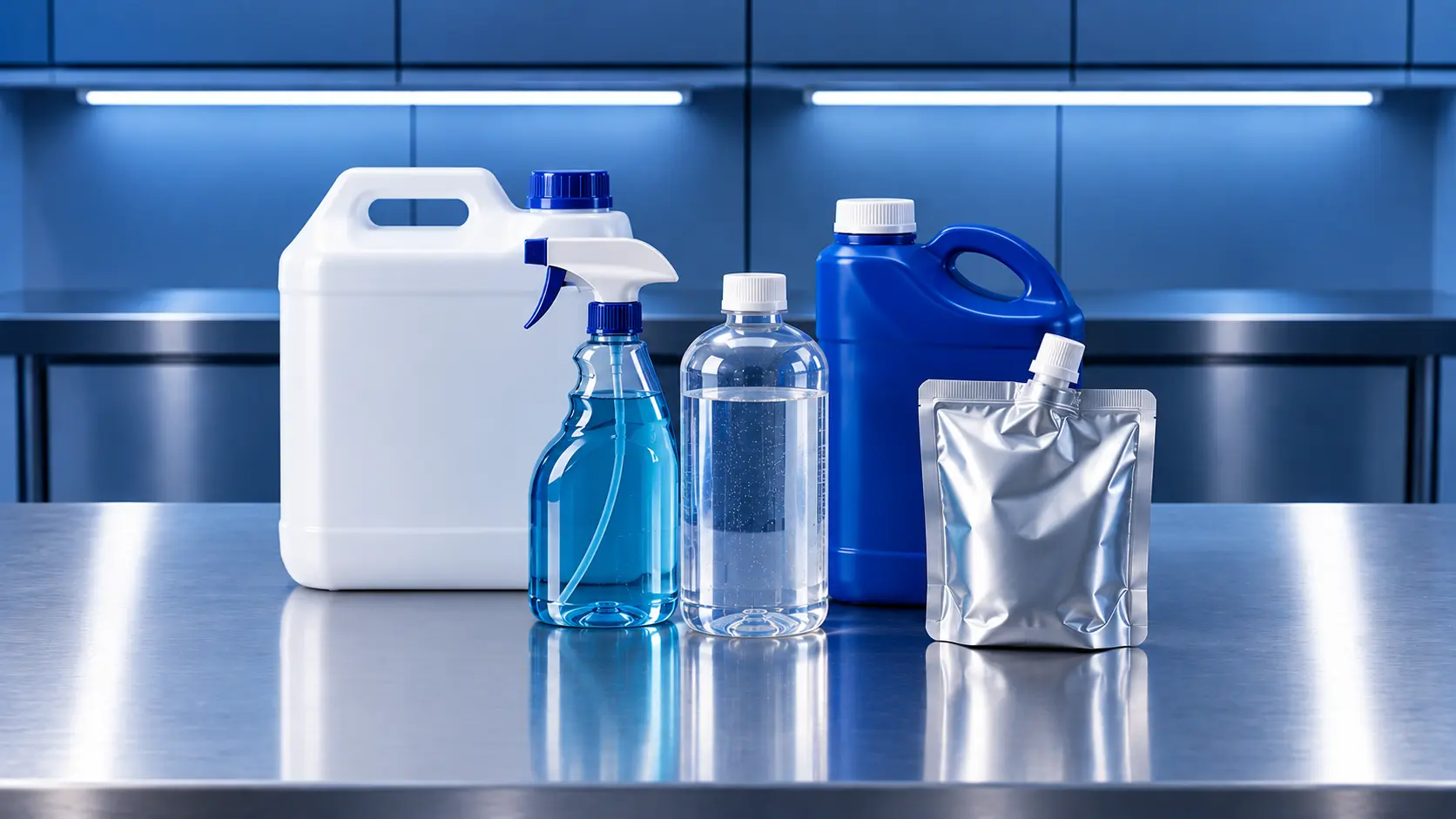
Chemical & Specialty Products
Cleaning products, hygiene liquids, fertilizers, agricultural chemicals and other specialty chemical packaging.
Bubble Emission or a Deterministic Method?
Bubble emission locates leaks visually; vacuum decay and HVLD measure physical signals. Select and validate the method for your package. These methods are not interchangeable.
Compare Probabilistic and Deterministic MethodsBubble Emission
- Visual observation
- Can locate a leak
- Useful for routine package QC
- Relatively simple operating principle
Vacuum Decay / HVLD
- Measures a physical signal
- Objective measurement output
- Used in specific CCI applications
- Requires application-specific validation
Why Choose DVACI?
Manufacturer
CDV vacuum chambers are designed and manufactured by DVACI for package integrity applications.
Scalable Range
Move from manual control to semi-automatic or PLC operation as test volume increases.
Application Support
Get help selecting chamber size, test method and operating configuration for your application.
International Support
Direct technical support combined with an international distributor network. Find a DVACI distributor.
How to Choose a Vacuum Leak Tester for Packaging
The right package leak testing equipment depends on your packaging format, test objective and quality-control workflow—not only chamber dimensions.
1. Identify the package
Start with flexible pouches, sealed trays, bottles, jars, tubes or other rigid containers. Package geometry, fill product and seal design affect method selection.
2. Select the test method
Choose bubble emission when visible leak-location evidence is needed, or evaluate dry testing for suitable liquid-filled containers. Match the procedure to the test objective.
3. Define the chamber and controls
Check maximum package dimensions, samples per cycle, target vacuum, hold time and operator workflow. Compare CDV sizes and manual, semi-automatic or PLC controls.
4. Validate with your samples
Confirm that the selected configuration and method work with your product, packaging material and acceptance criteria before specifying equipment.
Explore the CDV vacuum chamber models, review applicable test standards, or request an application evaluation.
Technical note: Visual vacuum leak testing is method-dependent; it should not be described as a universal substitute for quantitative or validated package integrity tests.
Vacuum Leak Tester for Packaging FAQ
A vacuum chamber lowers pressure around a package, revealing leaks as bubbles in water or visible product seepage.
ASTM D3078 describes bubble emission leak testing for flexible packaging. Other methods apply to different package formats and test objectives.
Typical leak-test cycles take under a minute to several minutes. Your package and approved procedure determine the hold time; altitude-simulation tests may take longer.
Wet immersion tests generally make the tested package unsuitable for sale. Dry tests may be non-destructive depending on the product and test conditions.
Yes. Atmospheric pressure decreases with altitude, so maximum attainable vacuum and test settings must consider the installation location.
Select a chamber that can hold your largest package with sufficient space around it and consider how many samples you need to inspect during one test cycle.
Find the Right Vacuum Leak Tester for Your Packaging
Share your package dimensions, required standard and daily test volume. We will help you choose a CDV configuration.