
Blister Pack Leak Tester for Dye Ingress and Package Integrity
A blister pack leak tester challenges the sealed package under controlled conditions so a leak path can be revealed, documented and investigated.
For pharmaceutical blisters, the right method is not chosen by chamber size alone. Headspace, lidding material, cavity geometry, target defect and the required result determine whether a visual dye-ingress procedure or a deterministic technology is appropriate.
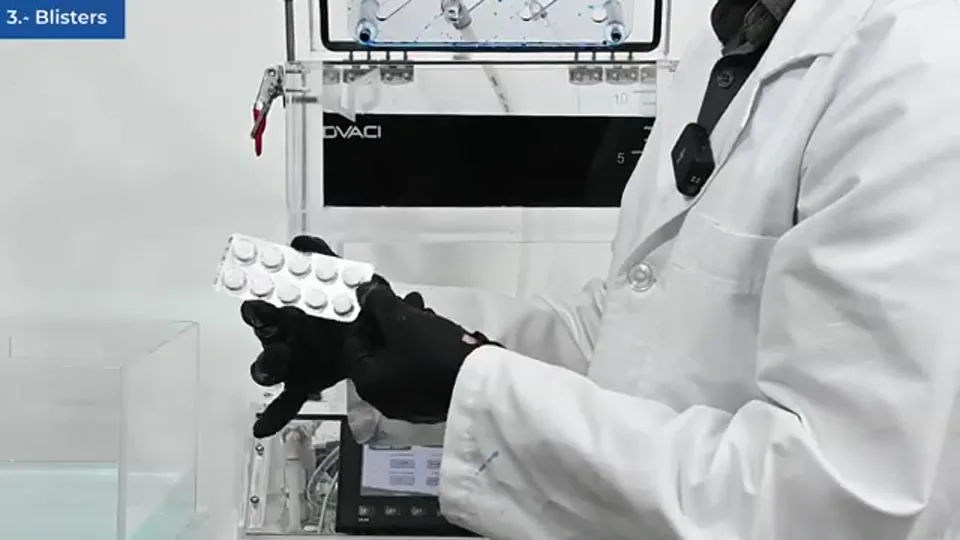
Why Blister Packs Need a Specific Leak-Test Strategy
A pharmaceutical blister does not behave like a gas-filled pouch. The package construction and the required quality decision change what the tester must reveal.
Limited useful headspace
A cavity may release too little gas to create a persistent bubble stream. A visible tracer can remain inside the cavity after the challenge and make the leak indication easier to inspect.
Several possible leak paths
Defects may occur in the formed pocket, the lidding material or the seal interface. The procedure must expose the area of interest without creating a new failure.
Method validation matters
Vacuum, pressure, exposure time, tracer, inspection and acceptance criteria have to be defined for the actual blister-product system. The equipment alone does not make a method compliant.
How a Dye-Ingress Blister Pack Leak Test Reveals a Defect
The package is exposed to a tracer under controlled differential-pressure conditions. After the cycle, the blister is inspected for visible ingress at a cavity or seal path.
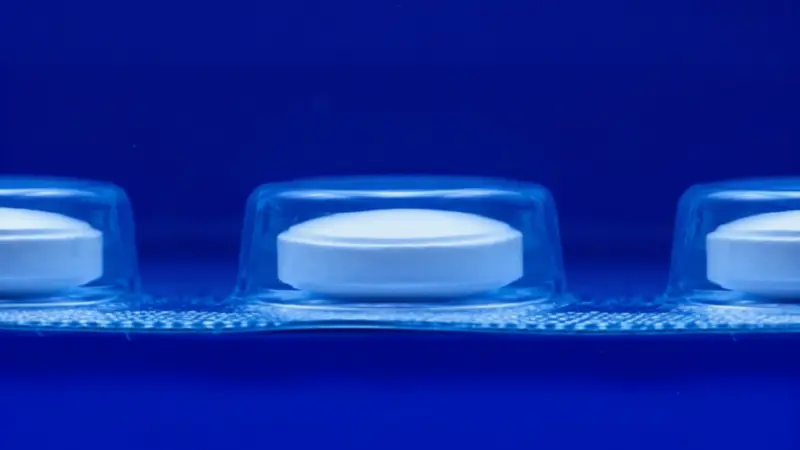
No visible tracer inside the cavity
The inspection criteria, lighting, orientation and observation time must be fixed in the approved procedure. A visually clean cavity is only a result for those test conditions.
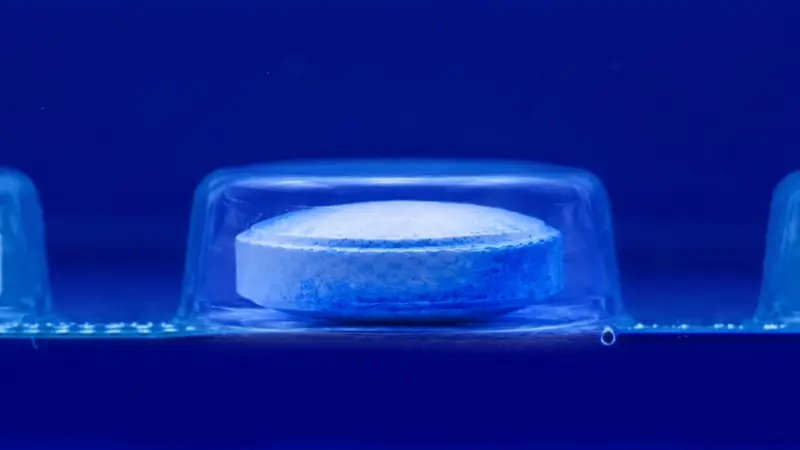
Tracer inside the blister indicates an ingress path
Dye ingress is qualitative and destructive. It helps locate or confirm ingress under the chosen conditions, but it does not report a numerical leak rate.
See the complete dye ingress and USP <1207> guideImportant distinction: dye ingress, dye penetration, bubble emission and vacuum decay are not interchangeable names. Each method has its own physical indication, scope and validation requirements.
What to Specify in a Blister Pack Leak Tester
The chamber, control platform and documentation package should be selected around the method and laboratory workflow.
CDV Pharma vacuum and pressure platform
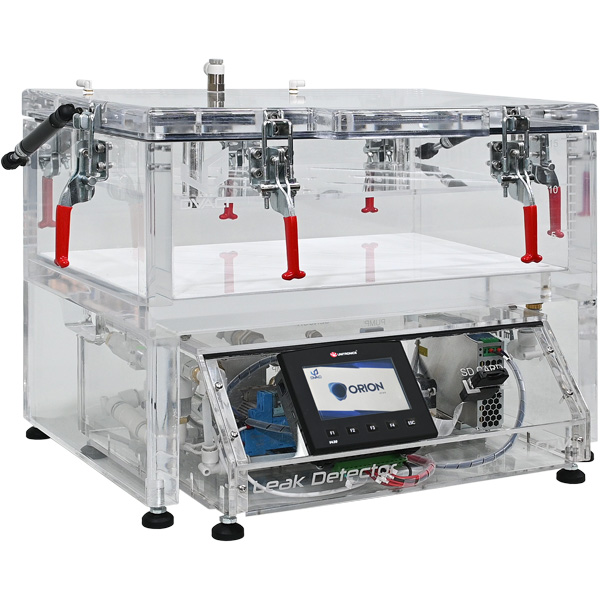
A transparent chamber supports visual observation, while the PLC-based control platform manages defined vacuum or pressure sequences. The exact configuration depends on the validated procedure.
- Transparent chamber
- Vacuum and pressure options
- Stored recipes
- Test records
Match the setup to the package format
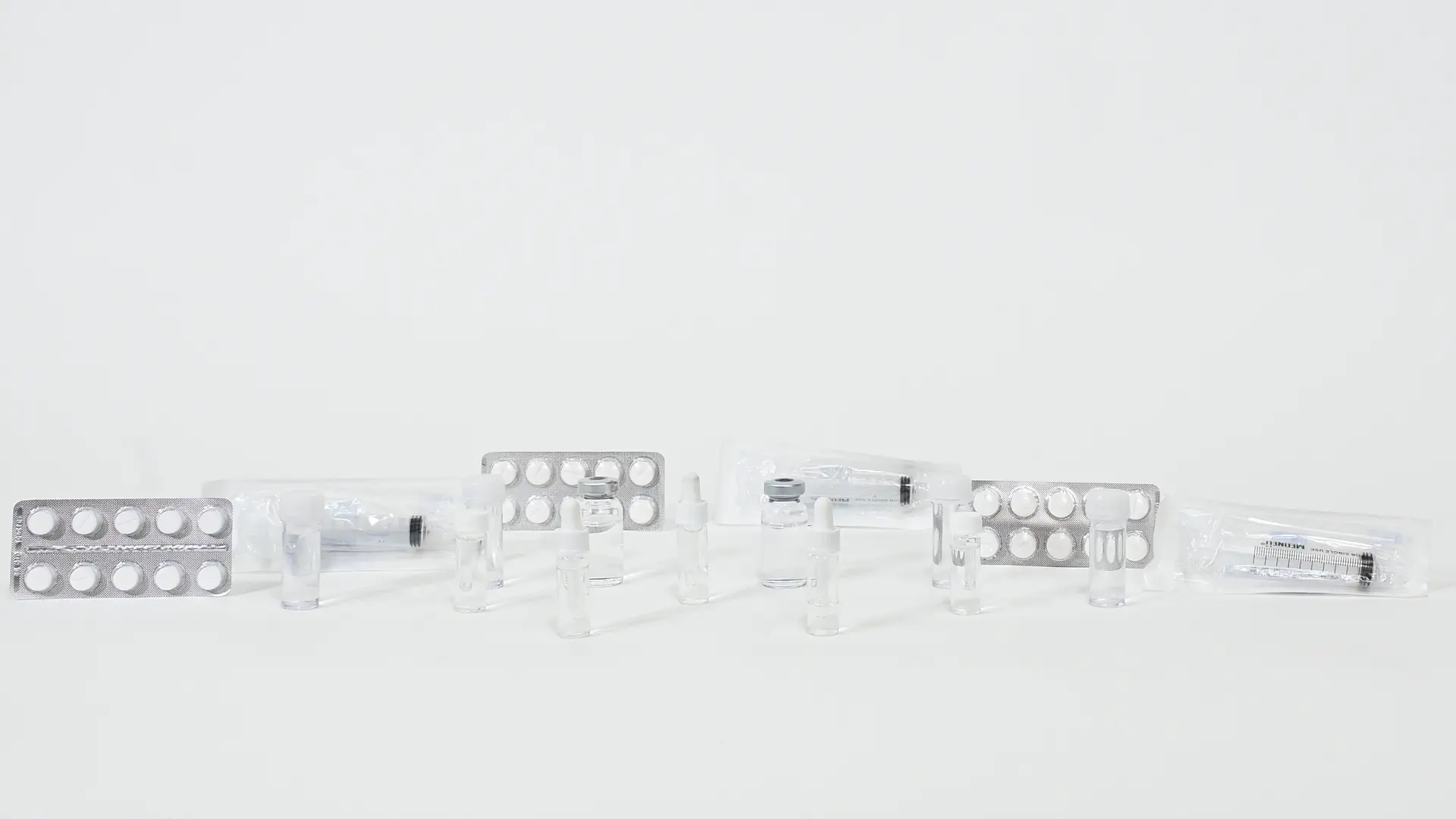
Share the complete blister dimensions, cavity count, forming and lidding materials, samples per cycle and daily test volume. Allow room for the basket, tracer and package orientation required by the procedure.
- Package dimensions
- Samples per cycle
- Target challenge
- Documentation needs
Blister Pack Leak Testing Methods Compared
The correct method depends on whether you need a visible tracer result, gross-leak location, a quantitative signal or a non-destructive measurement.
| Method | Indication | Typical result | Key limitation |
|---|---|---|---|
| Dye ingress / liquid tracer | Tracer enters through a leak path | Visual, qualitative, destructive | Does not provide a numerical leak rate |
| Bubble emission | Gas escapes from the package | Visual gross-leak location | Needs sufficient gas; often not the first choice for blisters |
| Vacuum decay — ASTM F2338 | Instrument measures pressure change | Deterministic, often non-destructive | Requires a compatible fixture and validated system |
| Laser vacuum deflection — ASTM F3169 | Laser measures blister deformation | Non-destructive measurement | Separate specialized technology |
Equipment scope: CDV Pharma supports visual dye-ingress and suitable vacuum- or pressure-assisted procedures. It is not a vacuum-decay instrument and it is not a laser vacuum-deflection system. Compare probabilistic and deterministic leak-test methods before specifying equipment.
Qualify the Test Before Routine Use
Do not copy vacuum, pressure or exposure settings from another blister. Build the procedure around your package and the quality decision it must support.
Define the test question
Specify the package, defect of concern, sample condition and whether the goal is development, validation, routine QC or investigation.
Establish challenge conditions
Develop vacuum or pressure, exposure time, tracer, orientation and inspection conditions without creating unrelated package damage.
Use controls
Run intact samples and appropriate positive controls or known defects to confirm that the complete setup can reveal the indication of interest.
Lock and document
Record equipment, recipe, sample identification, result, acceptance criteria and operator actions in the approved SOP and qualification package.
References Commonly Considered for Blister Package Integrity
Always consult the current official document and confirm that its scope matches the package, material and test implementation.
Probabilistic leak testing
Includes liquid-tracer technologies within container-closure integrity testing. The application must be validated for the package-product system.
Nonporous materialsASTM F3039Dye penetration
Detects and locates leakage in nonporous packaging or flexible barrier materials within the written method scope.
Porous medical sealsASTM F1929Seal-leak detection
Applies to porous medical packaging seals. It should not be assigned to a blister without confirming package construction and scope.
Blister-specificASTM F3169Laser vacuum deflection
A separate non-destructive method for leak detection in blister packaging by laser measurement.
Method note: adding vacuum or pressure to a dye procedure does not automatically make it compliant with a named ASTM standard. Follow the exact current method or document and validate any modification.
Blister Pack Leak Tester FAQ
A blister pack leak tester is equipment used to challenge a sealed blister under defined vacuum, pressure or tracer conditions and reveal a leak indication. The correct method depends on the blister material, lidding, seal design, product and the defect size that the procedure must detect.
Dye ingress or liquid-tracer testing is a common visual approach for pharmaceutical blisters, especially when the cavities contain too little gas for a persistent bubble stream. Deterministic alternatives such as vacuum decay or laser-based vacuum deflection may be appropriate when a quantitative or non-destructive method is required.
ASTM D3078 is written for flexible packaging containing headspace gas and detects gross leaks by bubble emission. Many pharmaceutical blisters have little useful headspace, so it is often not the first method selected. Use the method required by the package specification and validate it on the actual blister configuration.
Yes. A blister exposed to dye or another liquid tracer should not be returned to production or used as final product packaging. The result is a qualitative indication under the validated test conditions; it is not a quantitative leak-rate measurement.
No. CDV Pharma supports visual dye ingress and suitable vacuum- or pressure-assisted procedures. Vacuum decay under ASTM F2338 is a different deterministic measurement technology, and laser vacuum deflection under ASTM F3169 is another separate method.
Provide the blister dimensions, cavity count, forming and lidding materials, product type, required procedure or standard, target defect, samples per cycle, daily test volume and documentation requirements. DVACI can then evaluate chamber size, vacuum or pressure configuration and control level.
Test the equipment with your actual blister pack
Send the package dimensions, materials, required method and daily sample volume. DVACI will evaluate the chamber and control configuration for your procedure.